seogidi.com
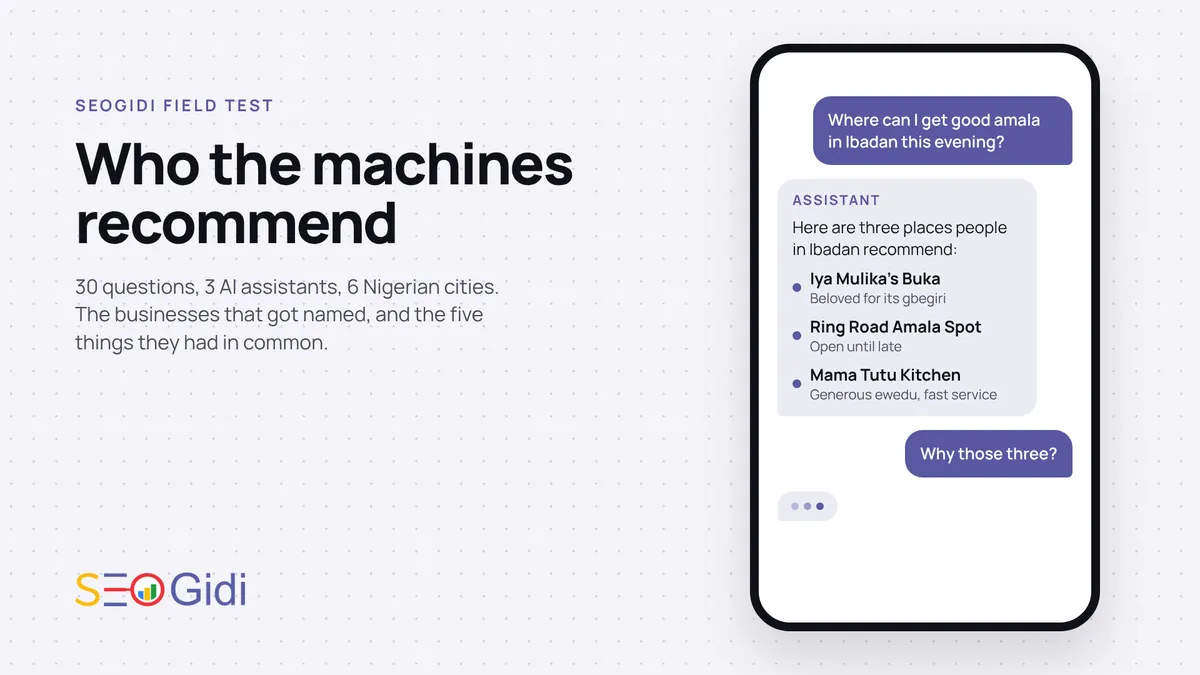
Thirty questions, three AI assistants, six cities. Nigerian commerce has a new gatekeeper, it has rules, and almost nobody selling anything knows them.
It started on a Friday evening, the way most honest experiments do, with hunger.
I typed one question into the AI on my phone, the exact way millions of people now ask: where can I get good amala in Ibadan this evening? Four seconds later the machine answered with confidence, named specific places, described one as beloved for its gbegiri, and wished me a good meal.
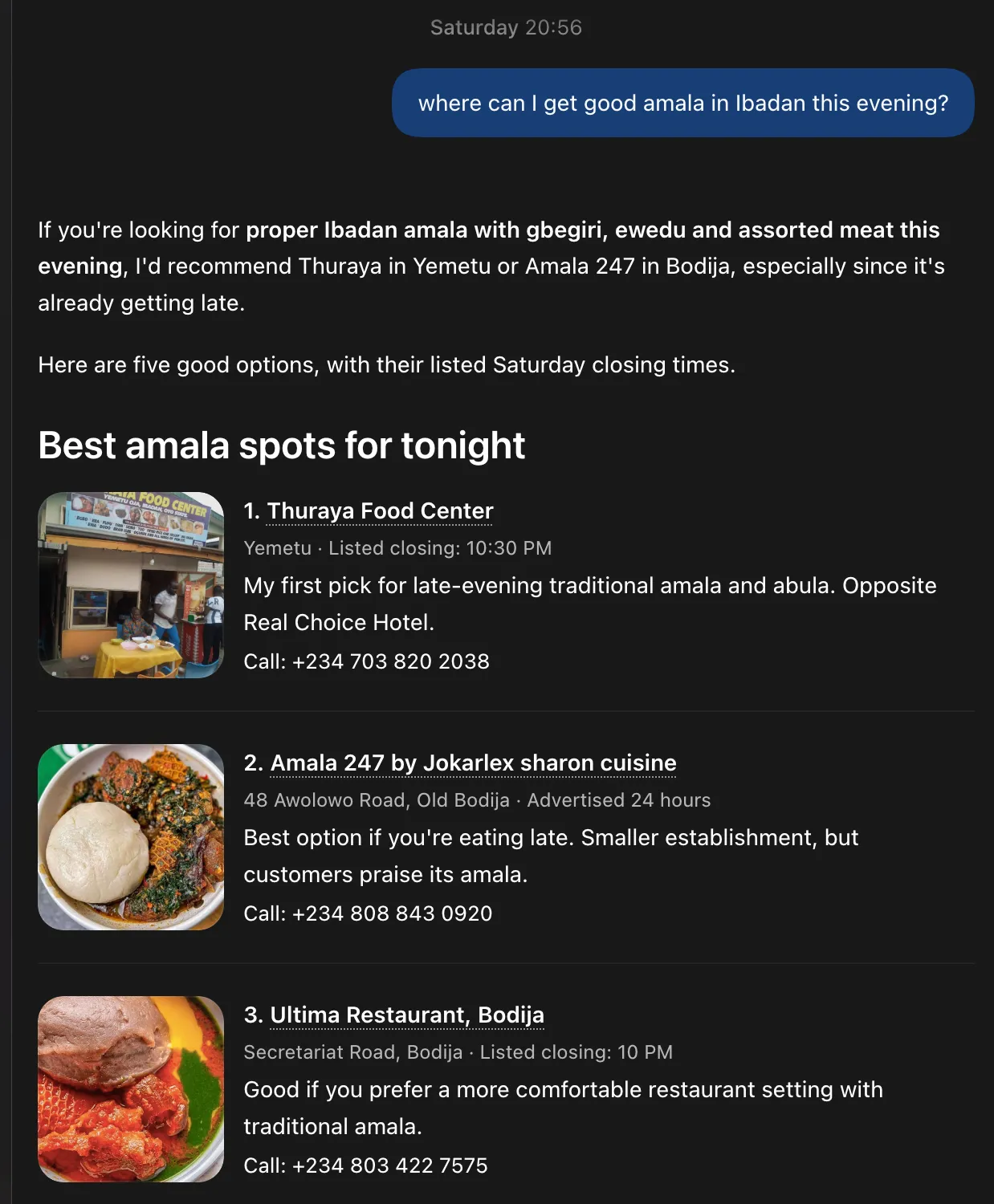
Sit with what just happened. A machine, trained far away, has just directed a hungry Nigerian with money toward specific Nigerian businesses, and away from every other amala spot in that city, including, possibly, the best one. No advert was bought. No signboard was seen. The machine simply decided, and somewhere in Ibadan, pots that deserved customers stayed fuller than they should.
So we turned it into a proper experiment. Thirty questions, phrased the way real people ask, never the way marketers write: trusted tailor in Enugu for agbada. Clean, affordable hotel near the Abuja airport. Wig vendor in Lagos that delivers same day. Reliable generator repairer in Port Harcourt. Honest mechanic in Ilorin for a Corolla. We asked ChatGPT, Gemini and Google’s AI Mode, across six cities and five business categories, wrote down every business the machines named, then went digging to understand why those names and not others.
This is not a small-sample curiosity. In BrightLocal’s consumer research this year, 45% of people said they already use AI tools for local business recommendations. Our own State of Search in Nigeria 2026 report found 84% of online Nigerians used generative AI in the past year, with help choosing products and services among the top uses.
Thirty questions is a field test, not a census, and the assistants give different answers on different days. But the patterns were strong enough to repeat across cities and categories, and they should change how every Nigerian business owner spends their next free hour. Five discoveries, from the uncomfortable to the strangely hopeful.
Discovery one: the machines check your website before anything else
Here is the finding that will upset the Instagram generation most.
Nearly every business the assistants recommended had a website the machine could read, even a modest one-page site with the basics stated plainly: what they sell, where they are, how to reach them. Vendors with enormous Instagram followings, the famous ones with the beautiful grids, were largely absent from the answers, because their entire existence lives inside an app the machines barely read.
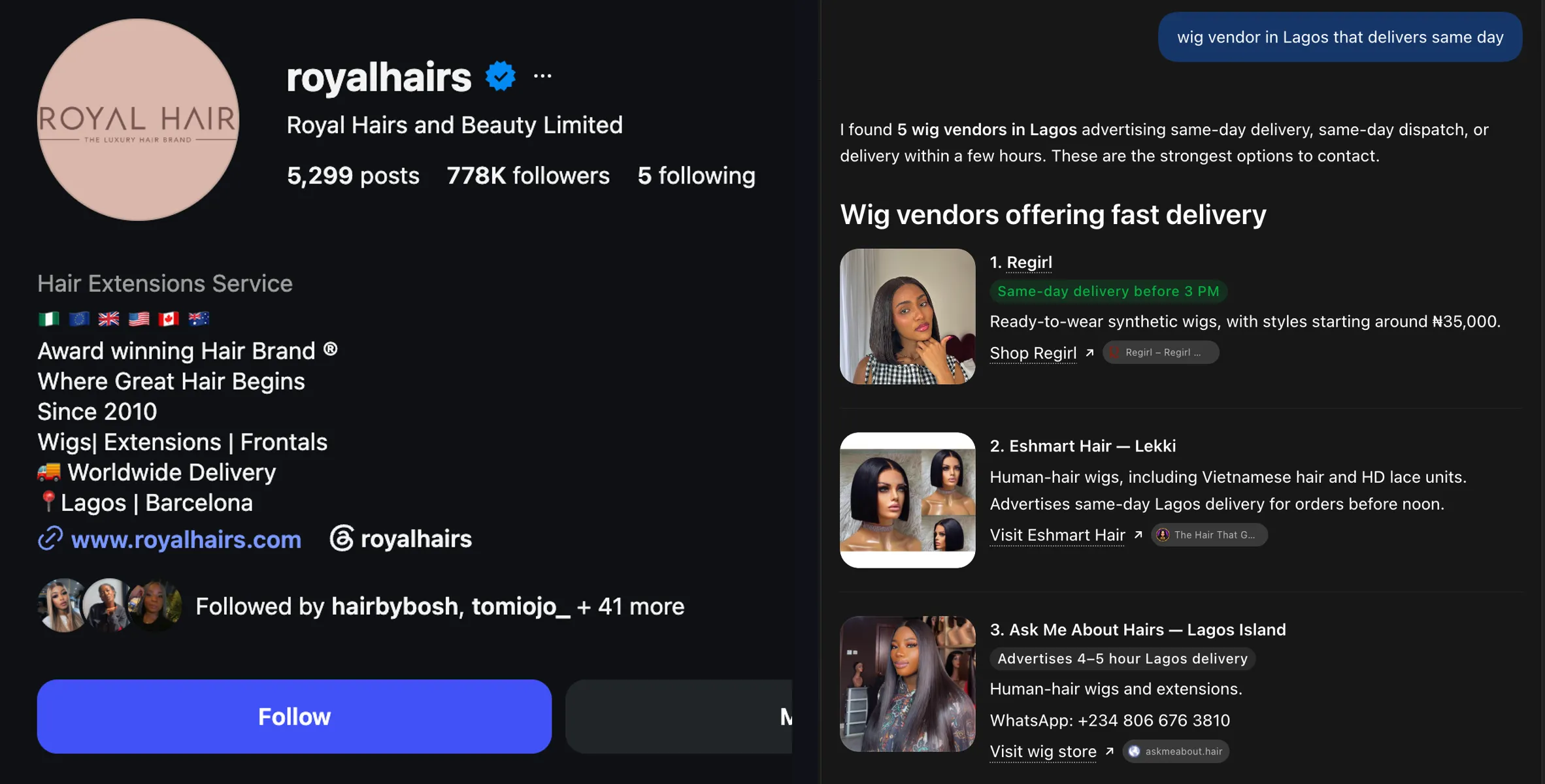
We chose that query because Royal Hairs is the most famous name in the category, the one any Lagos woman would guess first. Fame on Instagram did not carry into the answer. The vendors that were named had the exact promise in the question, same-day delivery, stated in plain words on a page the machine could quote. Followers are not a signal. Readable sentences are.
Then we let the machine do what a real customer would: narrow it down. It asked where in Lagos, human hair or synthetic, and the budget. With Ikeja, human hair and ₦30,000 to ₦70,000 chosen, the shortlist changed again, and the new number one won for one reason the assistant stated itself: “clearly priced 100% human-hair wigs”. It then listed three of that vendor’s wigs with their prices, a Jerry curl at ₦38,000, a glueless straight at ₦43,000, because those prices exist as sentences on a page it could read. The vendors below it carried a warning instead: “current prices, ready-to-wear stock and same-day delivery require confirmation”.
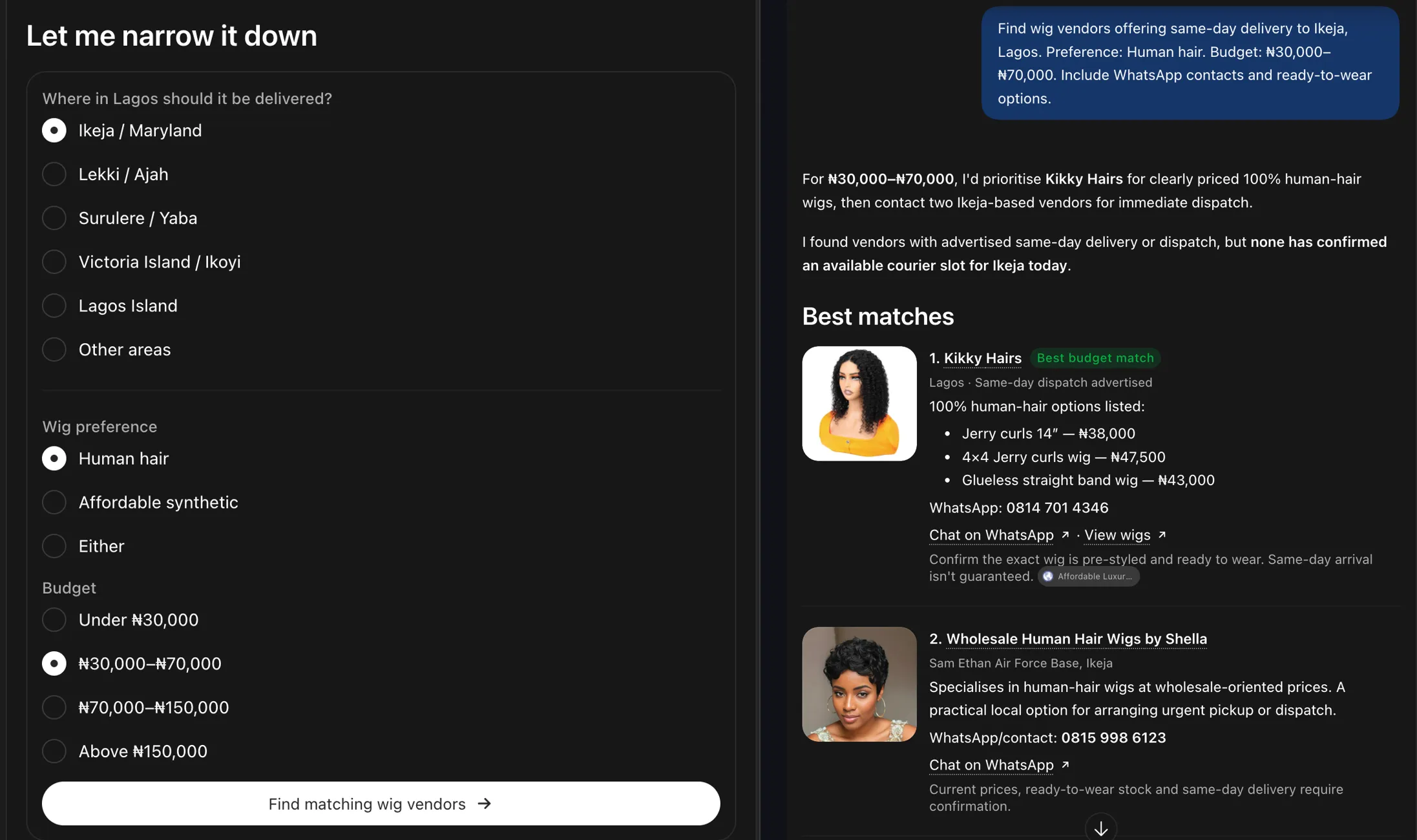
That is the whole lesson of the wig test in one exchange. The machine is not judging quality; it cannot. It is judging whether the facts a buyer needs, the price, the area, the delivery promise, the stock, are written down somewhere it can read. Write them down and you are in the answer. Keep them in your DMs and you are not.
None of this means abandoning Instagram. It is still where Lagos discovers a wig, decides it wants one and messages to buy. It means Instagram cannot be the only place you exist, because the newest customer-finding machine does not go there. And notice who won: four smaller vendors over the biggest brand in the category. For a small business that does the homework, the machine is the fairest shop window Nigeria has ever had.
Our results match the large studies. Steady Demand’s AI Citation Ledger, which traced 14,472 citations behind local answers in 50 cities, found business websites make up 60% of everything Gemini cites, with all the local directories combined at 10%. BrightLocal’s Local AI Visibility Study, nearly two million citations across 200,000 local searches, found business websites account for 93% of the domains AI assistants draw on. Local Falcon’s Restaurant AI Visibility Index measured the gap from the other side: restaurants with no website appeared in AI recommendations 17% of the time, those with one 26%.
The machine goes to your site first to learn what you are. No site, in the machine’s eyes, often means no you. The follower count it never saw; the humble one-page site it read in full.
The hopeful part: the bar is embarrassingly low. A clean one-pager stating your services, your area, your prices and your phone number in full international format already puts you ahead of the famous vendor who built her palace on rented, unreadable land.
Discovery two: the machines ask around to confirm you exist
The second pattern in the winners: their details matched everywhere.
The same business name, address and phone number on their site, their Google Business Profile, and the directories: VConnect, ConnectNigeria, the trade listings. BrightLocal’s study found the Google Business Profile alone behind 28.5% of all local AI citations, the single biggest source after business websites. The function is exactly what it is in a Nigerian market: confirmation. The machine is asking around about you, and when one source says Chioma’s Kitchen while another says Chy’s Buka at a different number, the machine does what a careful customer does with conflicting stories. It quietly drops you and recommends somebody whose story holds together.
Consistency, which costs nothing but one evening of correcting old listings, turned out to be one of the strongest predictors of who got named.
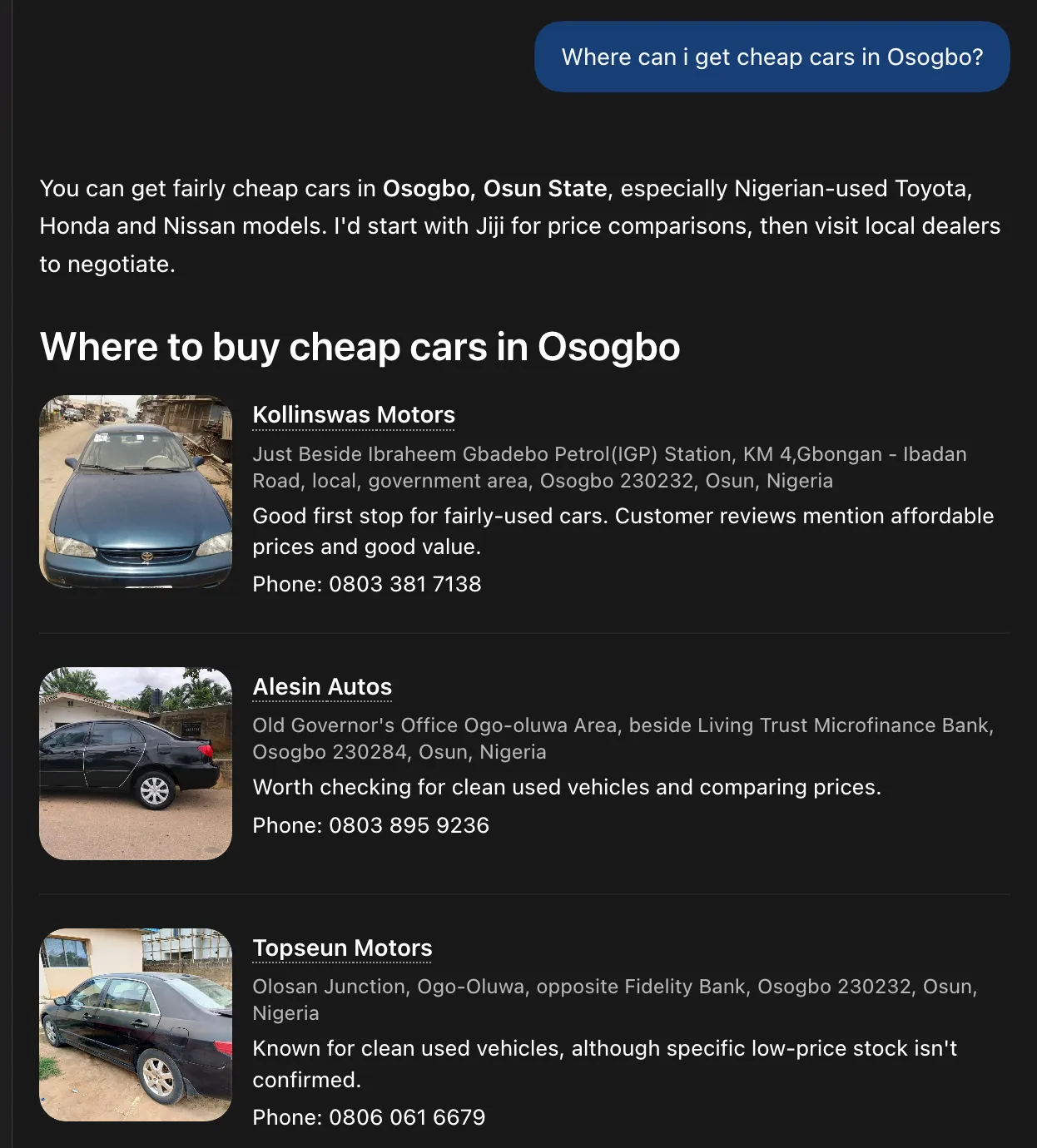
The Osogbo answer made the same point from the other side. Asked where to get cheap cars, the assistant named three dealers and, for each, recited the landmark-style address Nigerians actually use, “beside Ibraheem Gbadebo petrol station”, “opposite Fidelity Bank”, and a phone number. Those lines came straight from Google Business Profiles. A dealer with no profile, or one whose profile still carries last year’s number, simply was not in the running.
Discovery three: when the machine is choosing between businesses, reviews become the judge
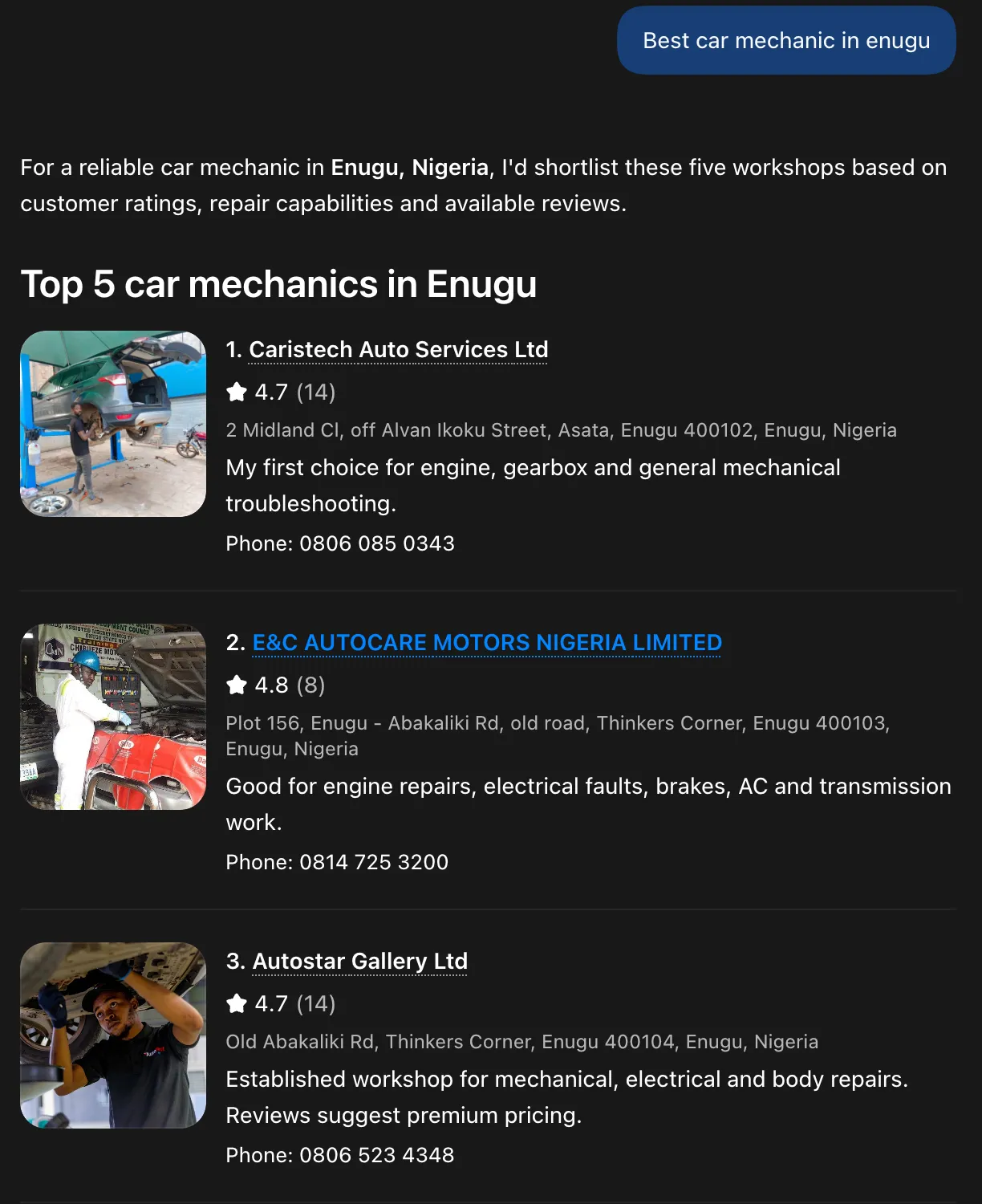
For general questions, the machines described. But the moment a question forced a comparison, best, most reliable, which one should I use, the answers changed character. The assistants did not just name winners, they justified them in language lifted almost directly from customer reviews. Praised for fast delivery. Known for honest pricing.
Your customers are writing your AI sales pitch, or your AI character assassination, one review at a time. The businesses that won comparisons had reviews in volume, with recency, carrying specific details. The numbers behind this are stark: in Insites’ study of 10,000 local businesses, the ones ChatGPT and Perplexity recommended averaged 133 Google reviews; the ones they ignored averaged 11. Local Falcon’s Hotel AI Visibility Index found ChatGPT named 52% of hotels with under 50 reviews and 84% of those with 2,500 or more.
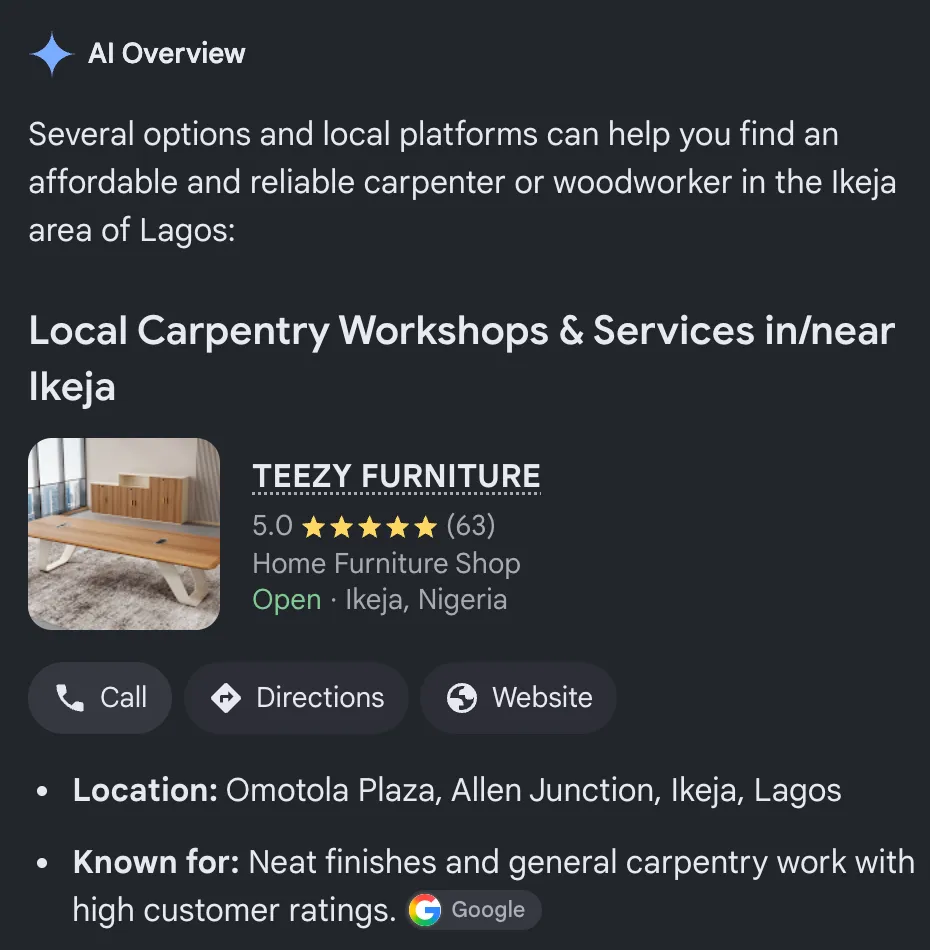
Google’s own AI Overview does the same thing in fewer words. Asked for an affordable carpenter in Ikeja, it put a 5.0-rated furniture maker with 63 reviews first and summarised the reviews into a “known for” line: neat finishes, general carpentry, high customer ratings. The second result had five reviews and no such line.
Before you assume the review mountain is unclimbable: the Nigerian businesses we saw named were nowhere near those American numbers, because their competitors were not either. In most Nigerian categories, twenty honest, detailed, recent reviews puts you in the top tier of your city. That is one month of asking every happy customer. And the people reading the answers are checking: 97% of AI users in BrightLocal’s survey said they double-check an AI recommendation against real reviews before acting on it.
Discovery four: the machines learned what “good” means from listicles
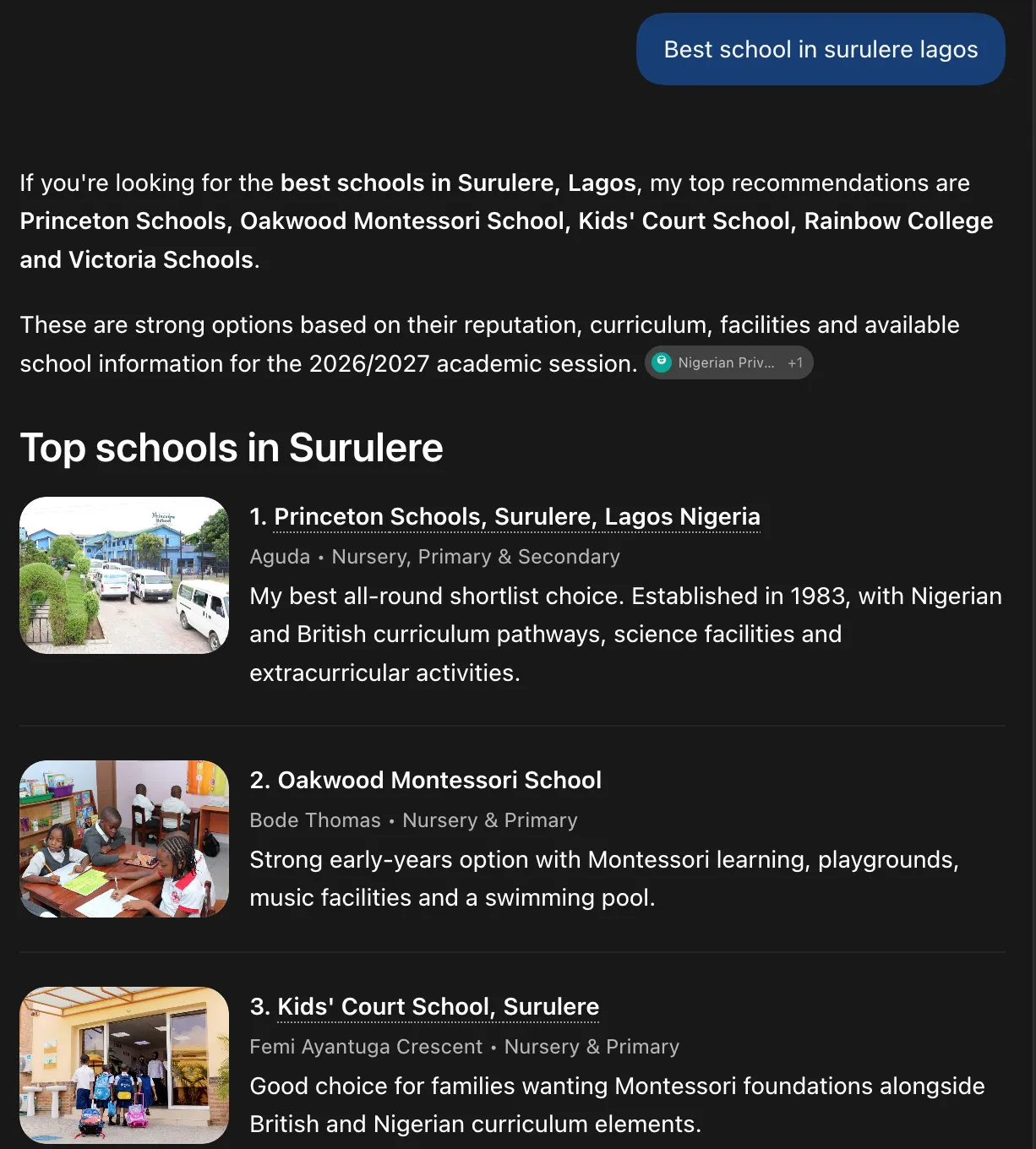
Where did the assistants learn which amala spot is beloved? Largely from the roundups: the ten best bukas in Ibadan, where to stay in Abuja, top tailors in Enugu. When comparing options in a category, the machines leaned on editorial lists and blogs to define excellence, and businesses that had ever been featured in any credible roundup kept reappearing in answers, sometimes years after the original article.
This is the mention economy I have been writing about all series, now with its mechanism exposed. Ahrefs’ study of 75,000 brands, which we charted in the State of Search report, found brand mentions on the web predict AI visibility three times better than backlinks do (a 0.66 correlation against 0.22). One feature in one local food blog is a permanent instruction to every AI engine about who belongs in the answer. If the bloggers have not found you, invite them. If your category has no roundup in your city, there is nothing stopping a business association, or frankly an ambitious business owner, from publishing the first one.
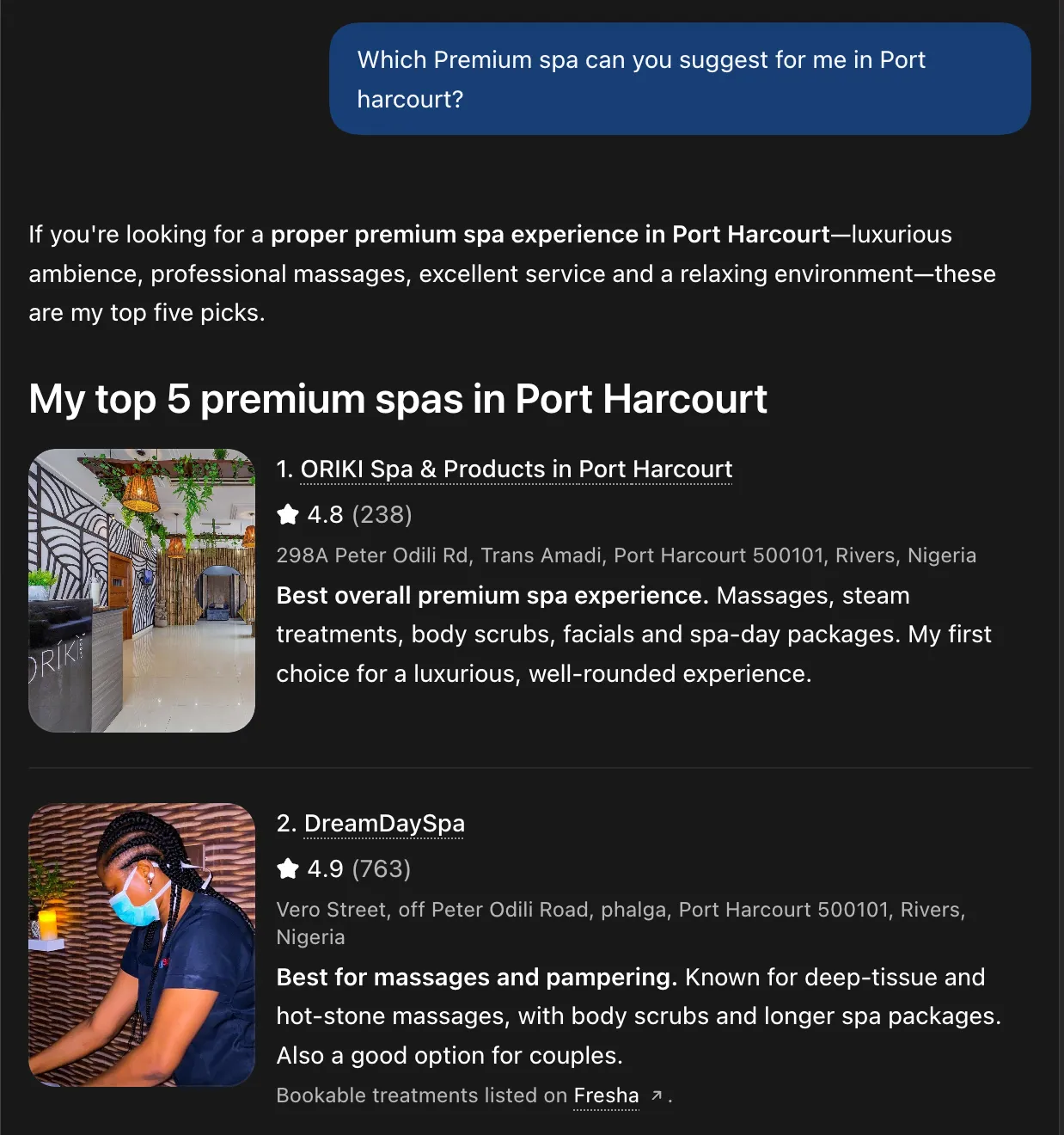
The Port Harcourt spa answer shows the other kind of mention that counts: a booking platform. The second-ranked spa’s entry carried a line the others did not, “bookable treatments listed on Fresha”, because its treatment menu and prices exist on a site the machine can read. Every platform where your business is described in full sentences, with prices, is a vote.
Discovery five: the machines confidently recommend ghosts
Now the finding that made us laugh, then wince.
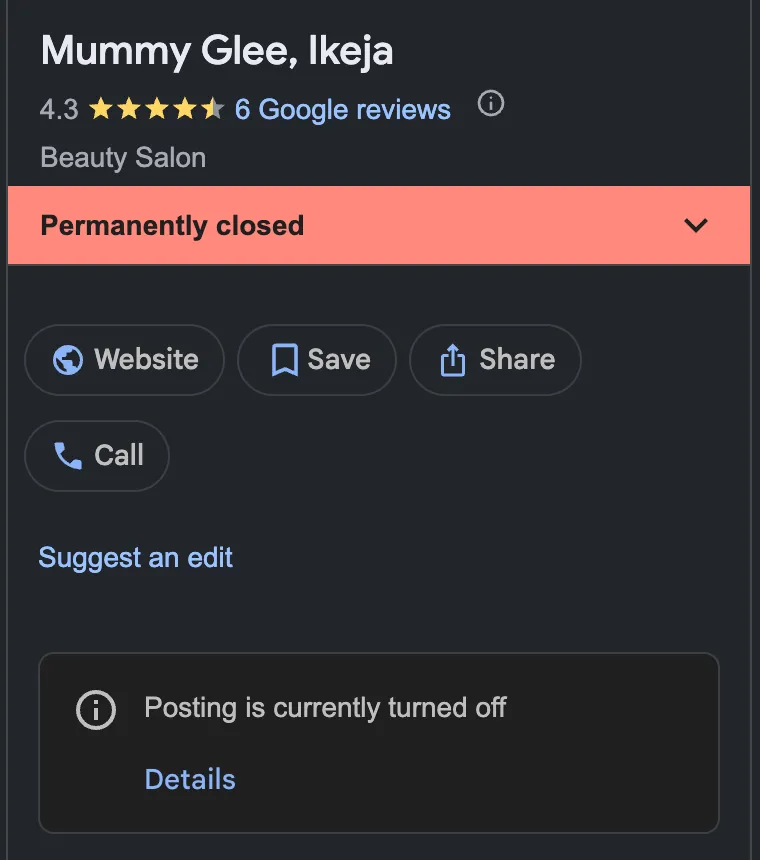
Several recommendations were out of date. A business that had moved. A spot that, as far as we could establish, no longer operates at the named address, still being warmly recommended to strangers by a confident machine.
Nobody should be surprised. When the European Broadcasting Union and the BBC tested AI assistants on news questions across 18 countries, 45% of answers had at least one significant problem. In Local Falcon’s restaurant test, one recommendation in twenty was for a place rated below 3.5 stars even though the prompt asked for highly rated ones. And the machines are not even consistent with themselves: Steady Demand found Gemini named the same top business on only 8% of repeat queries, where Google’s own local pack returned the same listing 90% of the time.
The machines are not malicious, they are merely out of date, repeating the last thing the internet told them. Which carries two lessons. First, if your business has moved, renamed, or changed numbers and you never updated the internet, the machines may be actively sending your customers to your past. Second, and this is the strange hope hiding inside the flaw, the gatekeeper is young and still half-blind. Its picture of Nigerian business is thin and out of date, and it is waiting to be written. Whoever feeds it clean, current, consistent, well-reviewed information now is teaching the textbook every future answer will be read from.
What a sensible business owner does with all of this
The playbook falls straight out of the findings, and none of it needs a budget.
- Give the machines something to read. A simple site or complete profile stating plainly what you do, where, and for how much. Our guide to local SEO in Nigeria covers the Google Business Profile side.
- Make your story match everywhere. One name, one number, one address, on every platform and directory. Fix the old listings before you create new ones.
- Build the review corpus deliberately. Twenty detailed, recent reviews before you worry about two hundred. Ask at the moment of delight, and make it a one-tap link.
- Get into the roundups, or cause the roundup to exist. Pitch the local bloggers; publish the category guide yourself if nobody has.
- Keep your information current the way you keep your shop swept. The machine remembers whatever was last written.
Then test yourself, tonight, using our exact method. Ask ChatGPT, Gemini and Google’s AI Mode the questions your customers would ask, your trade plus your city, phrased like a hungry or desperate person: best, trusted, reliable, near me, delivers. Note who gets named. Note whether you exist. That ten-minute exercise will tell you more about your next five years than any marketing seminar, and if the machine’s answer stings, that sting is the to-do list.
This whole discipline, teaching the AI engines who you are so they hand you customers by name, is what the industry now calls GEO. It is the work our AI search optimisation service exists to do for businesses that want it handled properly, and the do-it-yourself version lives in our guide to GEO and AEO for Nigerian businesses, free, like everything the machines rewarded in this experiment. If you want to know where you stand first, the free SEO audit now includes an AI visibility check: we run your trade and city through the assistants and tell you who they name instead of you.
The Friday evening, revisited
Back to that first plate of amala. The machine’s recommendation was decent. But the best amala in that part of Ibadan, by the testimony of people who actually live there, belongs to a woman the machine has never heard of, because the internet has never been told about her. Her pot is deeper and her queue is longer at two in the afternoon. And every evening, a confident machine directs hungry strangers past her door to a rival it happens to have read about.
That is the whole stake of this moment, in one street. The machines are not choosing the best businesses. They are choosing the best-described businesses, and in Nigeria today, those are rarely the same thing.
Which one is yours? Ask the machine tonight. It will tell you exactly where you stand, in four seconds, for free.
How we ran the test
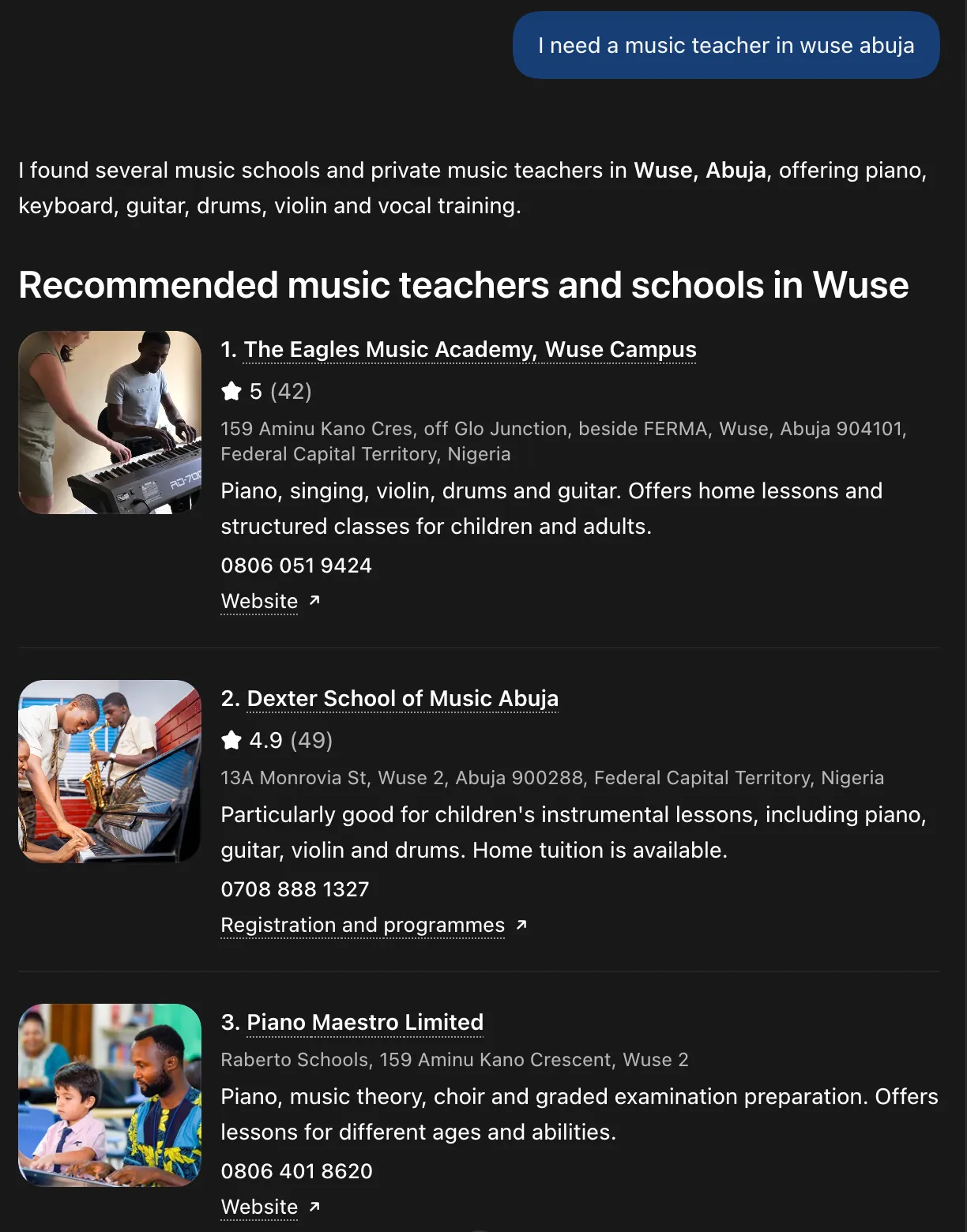
Thirty questions across Lagos, Abuja, Ibadan, Port Harcourt, Enugu, Osogbo and Ilorin, covering food, fashion and beauty, schools and tutors, vehicles and repairs, home services and hospitality. Each question was put to ChatGPT, Google Gemini and Google AI Mode in October 2026, in a signed-out browser or a fresh app session, worded as a customer would word it. Among the questions shown in this article: good amala in Ibadan this evening; a wig vendor in Lagos that delivers same day; an affordable carpenter in Ikeja; the best school in Surulere; cheap cars in Osogbo; a premium spa in Port Harcourt; a music teacher in Wuse, Abuja; the best car mechanic in Enugu. We recorded every business named, then checked each one’s website, Google Business Profile, directory listings, review count and any editorial mentions to see what the named businesses had that the unnamed ones lacked. Screenshots in this article are unedited apart from cropping. Results are a snapshot: as the studies above show, the assistants change their answers from day to day, which is itself part of the finding.
Reports, articles and industry research, by email
Original Nigerian search data a few times a year, new guides as they are published, and a short note when Google or Meta changes something that affects businesses here. No sales emails, unsubscribe in one click.

Want this done for your business?
Get a free SEO audit: rankings, technical issues, competitor gaps and the quickest wins, within 48 hours.