The zero-naira plan for growing your business online, at your own pace, with tools that cost nothing but consistency.
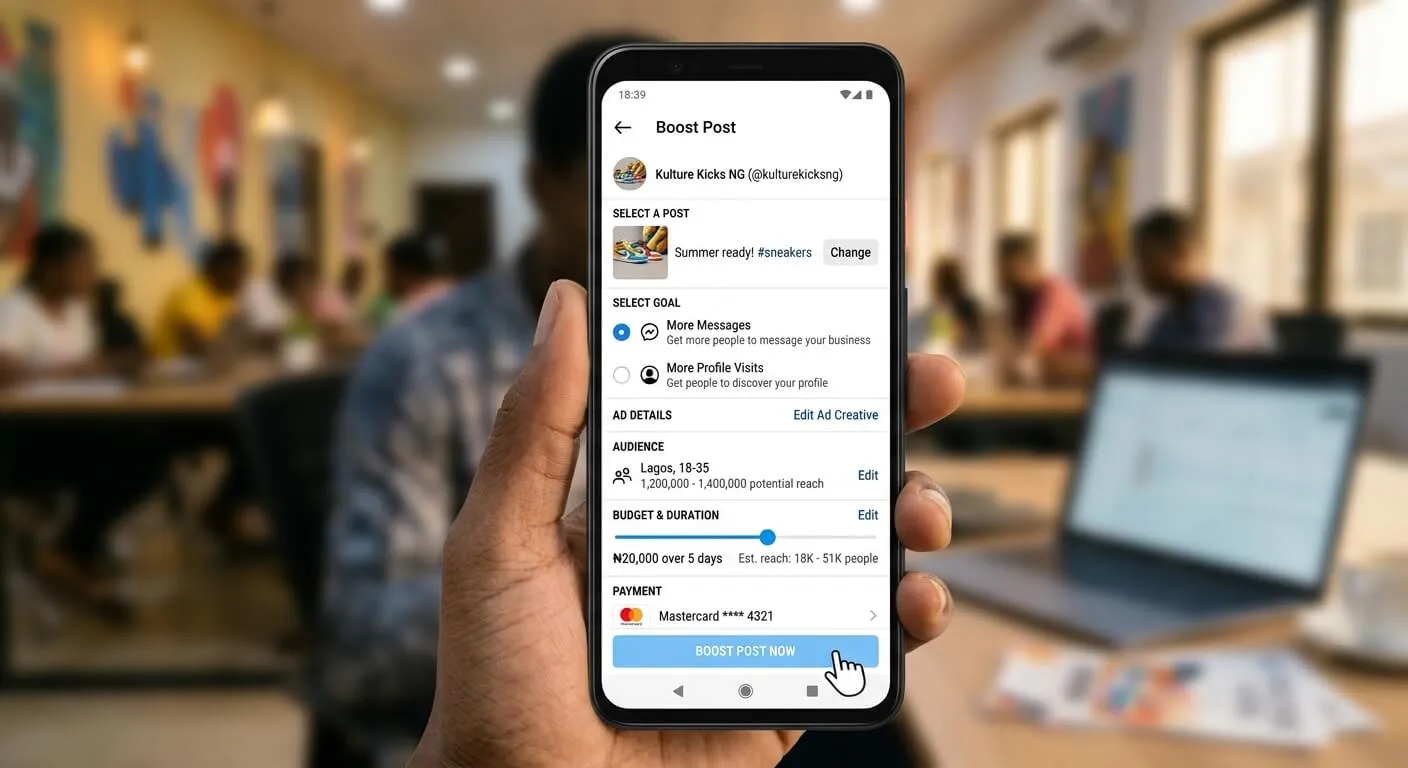
Halima makes the best yaji in her part of Kaduna. Suya men buy from her in secret and take the credit. Her zobo, in December, causes minor family disputes. Last year she decided to take the business online, and the internet gave her its favourite advice through a cousin who “knows tech”: boost the post.
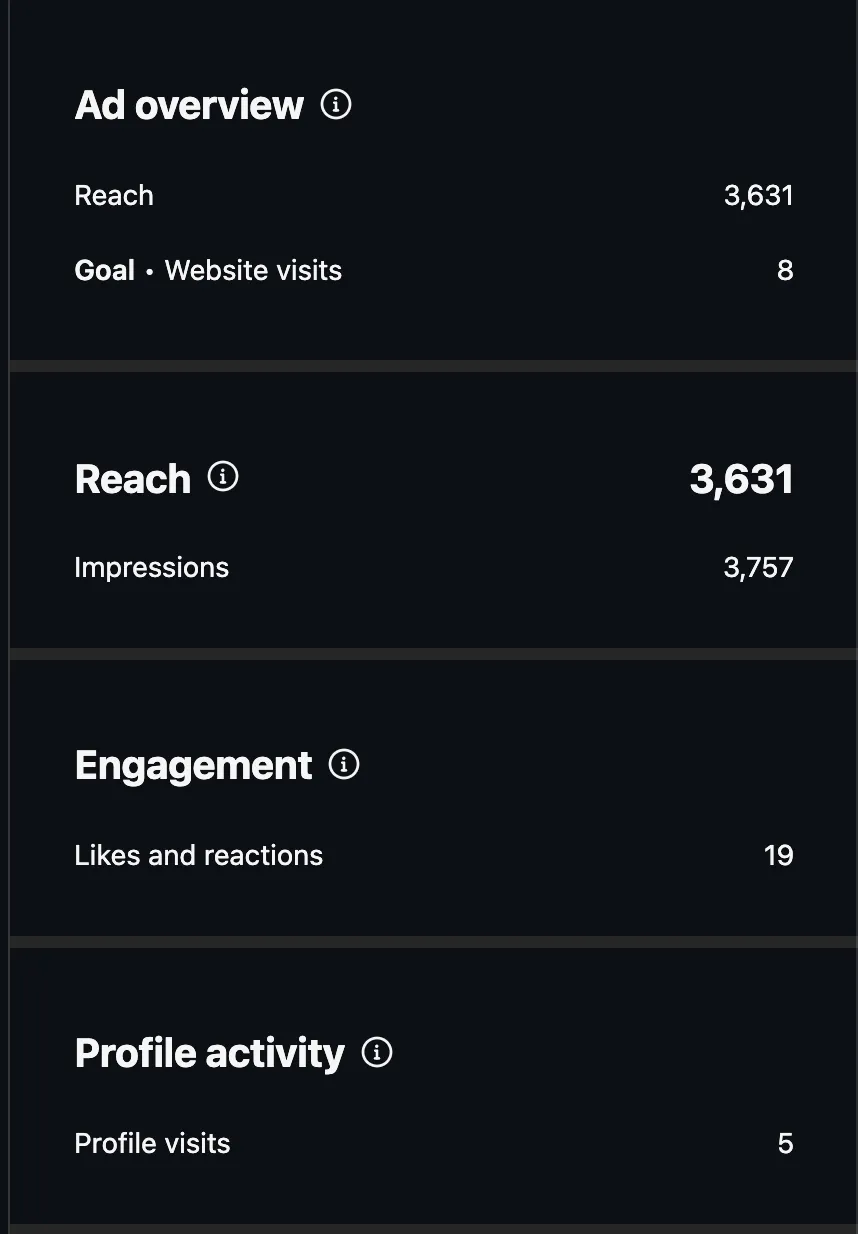
So she boosted. Five thousand naira, money that was supposed to buy raw materials, sent to Mark Zuckerberg with trembling fingers. The likes came. Strangers from countries she has never visited admired her pepper. Accounts with no faces told her “nice page dear.” Orders: zero. The five thousand naira never greeted her again, and the lesson Halima took from it, the lesson thousands of small business owners take from it every day, was a dangerous one: that online growth is a rich person’s game, and since she has no advertising money, she should just manage her WhatsApp status and leave the internet for the big brands.
I have spent twelve years doing this work, and I am writing this to tell Halima, and you, that she learned the wrong lesson from the right pain.
Here is the right lesson, and it needs a picture you already know. Paid advertising is sachet water. You pay, you drink, you are thirsty again by evening, and the moment your money stops, the water stops, completely, instantly, as if you never spent at all. Organic visibility is a borehole. Digging it is slow and unglamorous and nobody claps while you do it. But once the water finds the surface, it flows whether you paid attention that week or not, and it flows for years.
Big brands buy sachets by the truckload because they can afford to be thirsty expensively. You cannot, and here is the twist this whole article stands on: that is not your weakness. The business with no ad budget is forced to build the thing that actually lasts. Your empty pocket is pushing you toward the well.
So let me hand you the digging plan. Five stages, in sequence, every single one free, and the pace is yours. Do a stage per week if you have fire, a stage per month if you have children and a shop and NEPA to fight. The borehole does not care how fast you dig. It only cares that you do not stop.
Stage one: Claim the free land
Before anything clever, collect what is being given away.
The internet has free land that most Nigerian businesses walk past daily. A Google Business Profile costs nothing and puts you on the map, literally, when anyone in your area searches for what you sell. A WhatsApp Business account costs nothing and gives you a catalogue, a business description, automated greetings, and broadcast lists. Setting up both properly takes one honest evening.
Do it with the care of someone registering land documents, because that is what this is. Your real business name, written one way, the same way, everywhere forever. Your phone number in full international format, 234 and the rest, so that the customer in the diaspora can call. Real photos: your actual products, your actual workspace, your actual face. The face matters more than you think; in a country where everyone has been scammed or knows somebody who has, a visible human being is itself a marketing strategy.
When you finish this stage, something quiet and important has happened. For the first time, a stranger searching for your type of business in your area CAN find you. Not will, yet. Can. The borehole site has been marked.
Stage two: Turn your work into proof, weekly
Now we start digging, and the digging is lighter than you fear, because you will not be creating content. You will be capturing it.
Your ordinary working day is already full of marketing; nobody ever pointed a phone at it. The yaji being ground. The order packed and labelled for Zaria. The customer’s voice note saying God bless you, my husband almost ate the plate. One photo or thirty-second video per working day, captured while you work, talking the way you talk, in English or Hausa or pidgin or all three in one sentence. Then once a week, in one sitting, you post the best of it to the one platform where your customers actually are, plus your WhatsApp status, which may be the most underrated free marketing channel in this entire country, because everyone viewing it already half-trusts you.
Alongside the capturing, start the review habit. After every happy sale, one sentence: please help me with a short Google review, it helps others find me. Reviews are free, they rank you higher on that map you just claimed, and they are the testimony strangers believe precisely because you did not write it.
Notice what this stage costs. No ring light, no editor, no data-heavy production. A phone, the free version of CapCut if you want to trim, and the discipline of one weekly sitting. Imperfect is fine. Generator humming in the background is fine. In fact it is better than fine, because polished perfection is what adverts look like, and people scroll past adverts. They stop for the real thing.
Stage three: Answer the questions out loud
Here is where the borehole starts touching water, and almost nobody does this stage, which is exactly why it works.
Take a paper. Write the ten questions customers ask you every single week. How much? Do you deliver to my area? How long does it last? Is it original? Can I pay on delivery? What is the difference between this one and that one? Then answer each question publicly, plainly, one at a time: as posts, as short videos, as answers on your Google profile, as a pinned note on your WhatsApp.
Why does this unremarkable homework grow a business? Because every one of those questions is being typed into Google and asked of AI assistants, right now, by strangers in your city holding money. Search engines exist to match questions with answers, and the machine can only hand customers to businesses that have answered out loud. When you publish the answer to how much does event zobo cost in Kaduna, you are not posting content. You are standing at the exact junction where your next customer will pass, holding a sign with her own question on it.
Answer honestly, especially about money. In a market where everybody hides prices behind DM for price, the business that speaks figures in public collects the trust of an entire exhausted audience, free of charge.
Stage four: Borrow audiences without paying rent
You have a plot, proof, and answers. Now we bring people past your gate, and since we have no ad money, we will do what Nigerians have always done brilliantly: use community.
Go where your customers already gather and be useful there without advertising. The estate WhatsApp group, the Facebook buy-and-sell groups for your city, the Nairaland threads where people ask please who knows a reliable person for this thing. Answer questions generously. Solve small problems publicly. When your name has become familiar as a helper, the group itself will market you; the day somebody asks for what you sell, three people will mention you before you even see the message, and a recommendation from a neighbour outranks any advert ever printed.
Then trade audiences with businesses beside yours. The tailor and the shoe seller. The caterer and the decorator. Halima’s yaji and the suya spot that buys it, finally given public credit in exchange for a public mention. Each of you posts the other, each inherits the other’s trust, and the price is friendship, which was free.
And give the local storytellers something to tell. Every city now has food pages, lifestyle blogs, small YouTube channels hungry for genuine stories. A woman whose grandmother’s pepper recipe now ships to three states IS a story. One honest feature on a local blog does two jobs at once: it sends you its readers today, and it becomes a permanent mention that search engines and AI assistants read forever when deciding whose name to recommend. Mentions are the currency of the new search, and they are earned, not bought.
Stage five: Pipe the water home
The last stage protects everything, because there is one danger in even free visibility: every audience so far lives on someone else’s land. The group can be closed. The algorithm can catch a cold. The platform can change its mood on a Tuesday.
So from now on, every customer and every serious enquirer goes into a channel you own: a WhatsApp broadcast list or channel, or a simple free email list. Invite them with a reason, first news of new stock, a small discount for the list, December pre-orders before the public. This costs nothing and it is the difference between a crowd and a customer base. The crowd belongs to the platform. The list belongs to you, and a message to two hundred people who already bought from you will outsell a boosted post to twenty thousand strangers every single day of the week, including Sunday.
That is the whole borehole. Free land, weekly proof, public answers, borrowed community, piped water. Nothing on the list requires money. Everything on the list requires the one resource the ad buyers are trying to avoid spending: patient, repeated, honest effort.
The part where I keep you from quitting
Now the truth that decides whether you actually get water, because the digging has one real enemy and it is not Google. It is week three.
Week three is when you have posted faithfully and the numbers are small and the voice arrives: see your life, nobody is watching, abandon this thing. Hear me clearly. Three customers from the internet in your first month is not failure. Three strangers found you, trusted you, and paid you, through a machine, without you spending one naira. That is proof the borehole has reached damp soil. The arithmetic of this method is compounding: the answer you posted in March brings a customer in September; the review from June convinces a bride in December; every week of digging stacks on every week before it. Ads stop working the day you stop paying. This never stops working, because you built it into the ground.
Set your pace and defend it. One hour a day, or one focused Sunday sitting per week, is enough to run all five stages. You are not racing the big brands. You are not racing anybody. You are digging at the speed your life allows, which is the only speed that survives real Nigerian conditions.
Halima is still in Kaduna. Her pepper did not change. If she spends the next few months on these five stages instead of mourning that five thousand naira, then by next December, when a stranger in her city asks Google, or asks the AI on her phone, where to find real yaji and proper zobo, the machine will do what machines do: hand over the name it has watched build, answer by answer, review by review, week by patient week.
The sachet sellers will still be shouting. Let them shout. You will be the one with water in the ground.
Pick up the phone. Stage one starts this evening, and it is free. And if you want to know exactly where your borehole stands today, a free SEO audit will tell you.
Want this done for your business?
Get a free SEO audit: rankings, technical issues, competitor gaps and the quickest wins, within 48 hours.