
Somewhere in your city right now, a person is holding their phone, typing the exact service you sell. “Hair salon in Ikeja.” “Generator repairer near me.” “Where to buy quality shoes in Owerri.” That person has money in hand and a problem you can solve. The only question is whose business Google will show them.
If the answer is not you, this guide exists to change that. It is written for the Nigerian business owner who is not a tech person, has no marketing budget, and needs every instruction in plain language with the real Nigerian obstacles addressed honestly. Follow it step by step and your business can start appearing when your own city searches for what you do. That is the entire promise of Local SEO in Nigeria, and it remains the cheapest customer machine available to any small business in this country.
What Is Local SEO, in Plain Language?
Local SEO (Search Engine Optimization) is the work of making your business appear when people search for products or services in your area. When somebody searches “best electrician in Enugu,” Google shows three layers of results: the map with the three businesses underneath it (called the local pack), the Maps app results, and the normal website listings below. Local SEO is how you climb into those positions, and increasingly, it is also how the new AI answers at the top of Google learn your name.
Think of it as the digital version of having your shop directly facing the busiest road in your area, except this road is where your customers actually stand today: their phones.
Why Local SEO Matters So Much in Nigeria Right Now
Nigeria has over 150 million internet users, and the overwhelming majority search from their phones, usually moments before they spend. The person searching “bakery in Surulere” at 4pm is not doing research for fun. They need cake today. If your bakery does not appear, the customer does not know you exist, and your competitor two streets away collects money that should have entered your account.
Here is the part most Nigerian business owners have not realised: the competition for these local positions is still shockingly thin. In London or New York, every plumber has been fighting for map rankings for fifteen years. In most Nigerian cities, half the businesses in any category have no Google presence at all, and most of the rest set up a profile once and abandoned it. This means an ordinary business owner who does the work in this guide properly can outrank older, bigger competitors within weeks. The field is open in a way it will not remain open forever.
There is also a second audience you may not have considered: Nigerians abroad. Every December and every wedding season, the diaspora searches for vendors, caterers, tailors, shortlets and services back home, entirely through Google and AI, with foreign currency in hand. They can only find businesses that made themselves findable. Local SEO is how you enter that conversation.
How Google Decides Which Businesses to Show
Google weighs three main things, and it helps to understand them before touching any settings, because every step in this guide is really just feeding one of these three.
- Relevance: does your profile clearly say what you do, in the words customers actually search? A profile that says “Chidi Ventures” with no category tells Google nothing. A profile that says “Chidi Ventures Plumbing Services,” category Plumber, with services listed, answers the question completely.
- Distance: how close is your business to the person searching? You cannot change your location, but you can make sure Google knows it precisely, and you can expand the areas you serve if you deliver or travel to customers.
- Prominence: how much does the internet talk about you? Reviews, mentions on other websites, directory listings, and links all tell Google that real people vouch for your business. This is the factor that separates the top three from everybody else, and it is where most of your ongoing work will go.
Step by Step: How to Rank Your Business Locally in Nigeria
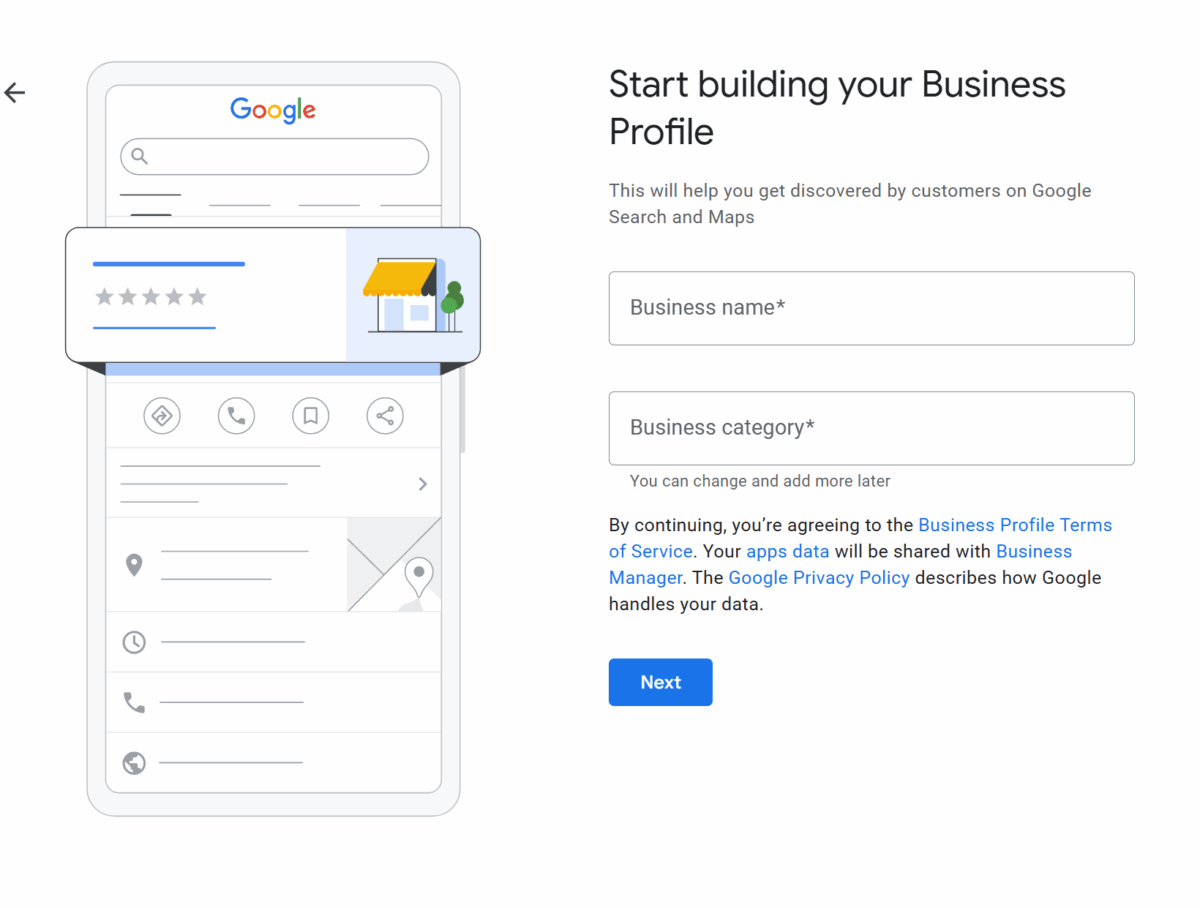
1. Set Up and Verify Your Google Business Profile (Do This Properly, Not Halfway)
Go to google.com/business and create your free profile. Use your real business name exactly as customers know it, without stuffing extra keywords into it, because Google suspends profiles for that. Choose your primary category with care; it is the single most important setting on the entire profile. Be specific: “Caterer” beats “Restaurant” if catering is your actual work, and you can add secondary categories afterwards.
Add your full address with the correct postal code, your opening hours, your website or WhatsApp link, and your phone number written in full international format (+234, then the number without the first zero). That format matters because diaspora customers cannot dial 0803 from abroad. Then upload real photos: your storefront from the road, the inside, your products, your face at work. Profiles with genuine photos receive dramatically more calls and direction requests than empty ones, and stock photos of foreign smiling models actively damage trust.
Now the honest Nigerian reality of verification. Google’s postcard rarely survives our postal system, so when the verification options appear, choose video verification where available. Google will ask you to record a short video showing your signage, your surroundings, and proof that you operate there, such as opening your shop or showing branded equipment. Do it in daylight, calmly, and it usually passes within days. If you run a home-based or service business with no shop customers visit, set the profile as a service-area business: hide the street address and instead list the areas you serve, for example Ikeja, Ogba, Agege, Berger. Do not invent a fake shop address; profiles built on fake addresses eventually get suspended, and recovering a suspended profile is a slow, painful process.
2. Keep Your Business Information Identical Everywhere (NAP)
NAP stands for Name, Address, Phone number, and the rule is simple: the exact same details, spelled the exact same way, everywhere your business appears online. Google Business Profile, Facebook, Instagram bio, WhatsApp Business, your website, and every directory. If you are “Chioma’s Kitchen” on Google, “Chioma Foods” on Instagram and “Chy’s Buka” on Facebook, Google sees three weak strangers instead of one strong business, and your ranking suffers for it.
Pick one version of your name today, write your NAP in a note on your phone, and copy-paste it from that note forever. This five-minute habit quietly outranks competitors who never developed it.
3. Put Your City and Service Where Google Reads First
If you have a website, even a simple one-page site, make sure your service and city appear together in the places Google weighs most: the page title (“Reliable Tailor in Yaba, Lagos | Your Business Name”), the main heading, the meta description, and naturally through the text. Name your image files descriptively before uploading, like “tailor-yaba-lagos-agbada.jpg” instead of “IMG_2041.jpg.” None of this is trickery; you are simply answering, in writing, the question Google is asking about every page: what is this, and where?
To find the words your customers actually use, you do not need expensive tools. Type your service slowly into Google and read the autocomplete suggestions, then scroll to “People also ask” and the related searches at the bottom. Those are real Nigerian searches, handed to you free. Free tools like Google Keyword Planner or Ubersuggest can add volume numbers when you are ready to go deeper.
No website yet? Do not let that stop you. A fully completed Google Business Profile plus an active WhatsApp Business catalogue can carry a small business surprisingly far while you save towards a proper site.
4. Get Listed on Nigerian Online Directories
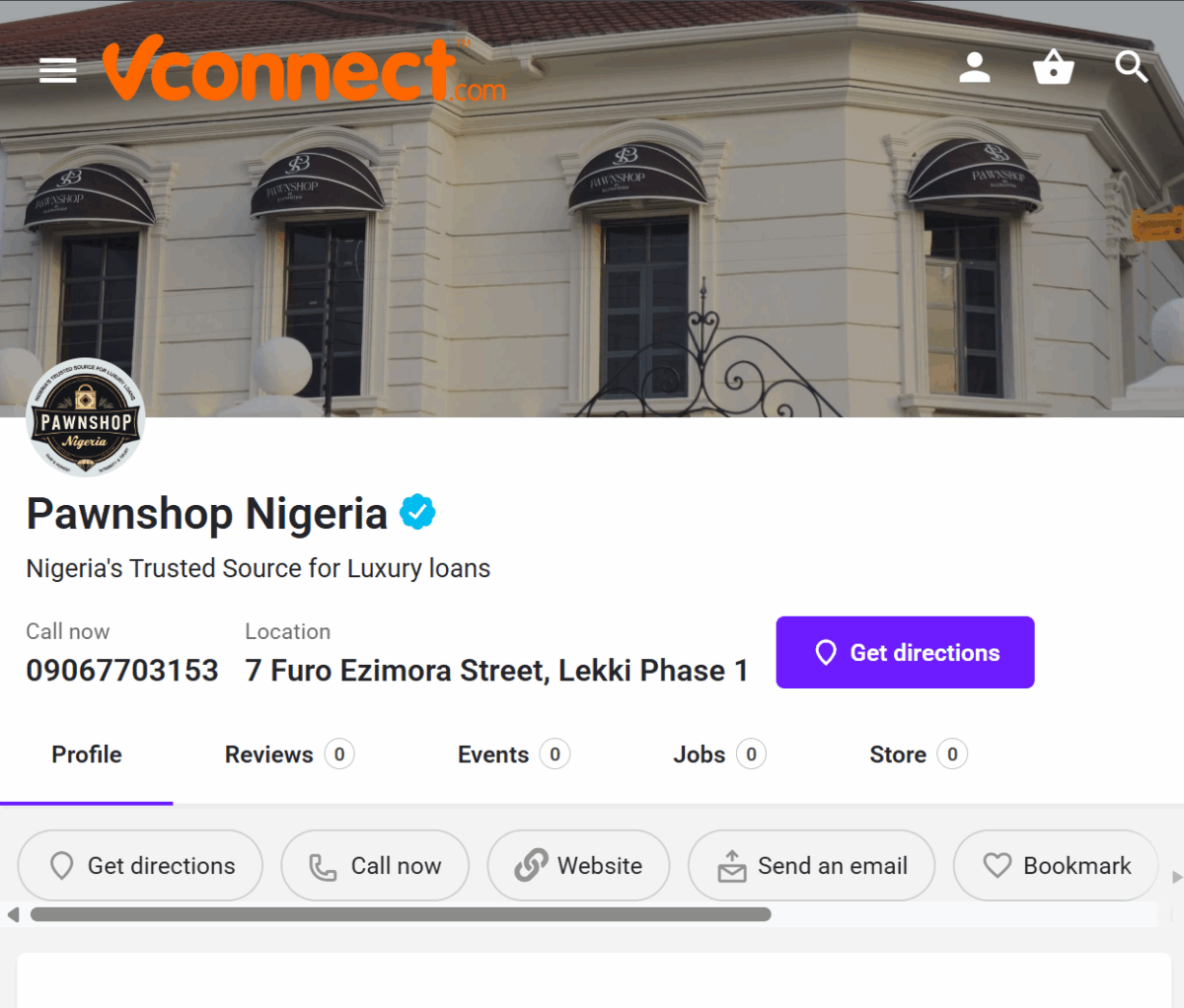
Every listing of your business on another credible website is called a citation, and citations feed the prominence factor directly. Start with the Nigerian directories: VConnect, BusinessList.com.ng, Finelib, ConnectNigeria, and NGContacts. Add your business to each, using your saved NAP note word for word. Then think beyond directories: your trade association’s member page, your church or estate community website, a local news site that profiles businesses. Each one is another independent voice telling Google, and the AI engines, that your business is real and rooted in its area.
One warning: never pay anybody who promises “500 citations overnight.” Bulk spam listings on junk sites do nothing at best and harm you at worst. Ten clean, correct listings beat five hundred rubbish ones.
5. Turn Happy Customers Into Reviews, Continuously
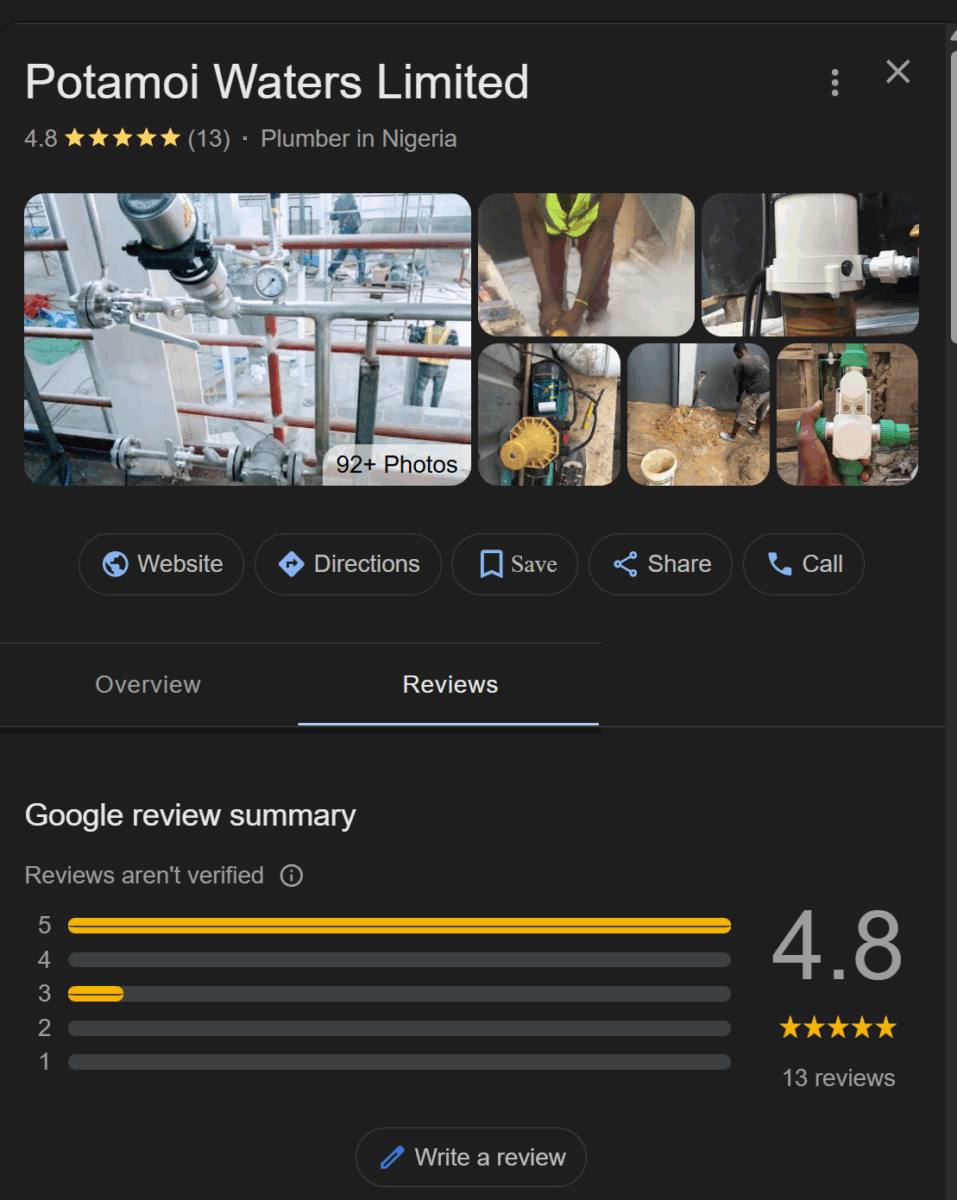
Reviews are the strongest prominence signal you control, and they double as your best salesman, because Nigerian buyers read them with the seriousness of people who have been scammed before. Build a system, not a one-time push. Get your review link from your Google Business Profile dashboard, save it, and send it to every satisfied customer while the satisfaction is still warm: “Thank you ma. If you enjoyed the service, please help us with a short Google review, it helps other people find us.” Print the QR code and paste it beside your counter.
Detailed reviews help more than star ratings alone, because Google reads the words. A review saying “their ofada delivery reached Lekki in 40 minutes, still hot” teaches Google that you deliver ofada to Lekki. You cannot script your customers, but you can gently ask them to mention what they bought. And reply to every single review, including the harsh ones, politely and personally. Google notices responsive businesses, and future customers judge you far more by how you handle a complaint than by the complaint itself. Never buy fake reviews; Google’s detection has become ruthless, and a profile caught faking can lose everything it built.
6. Publish Content That Answers Your City’s Real Questions
Write down the ten questions customers ask you every week, then answer each one publicly: as posts on your Google profile, on your social pages, or as short articles on your website. “How much does event catering cost in Abuja?” “How do we deliver to Lekki during the rains?” “How to know original human hair before you pay.” This is the content that ranks, because it matches what people genuinely type, and it is also exactly what the new AI answer engines quote when somebody asks them the same question. One honest, useful answer page will outwork twenty posts of “Happy new week from all of us!”
7. Earn Local Backlinks and Mentions
A backlink is when another website links to yours, and links from local, relevant sites tell Google you matter in your area. You earn them the same way you earn respect in the market: by being useful and visible. Invite a local food or lifestyle blogger to experience your service. Offer a short expert piece to a city news site, such as a mechanic writing “five signs of fake engine oil” for a Lagos motoring page. Join your local business association and make sure their website lists members. Partner with neighbouring businesses, the photographer recommending the makeup artist and both linking to each other. Slow, real, and permanent beats fast and fake in this game, every time.
8. Make Your Website Fast on Nigerian Phones and Nigerian Data
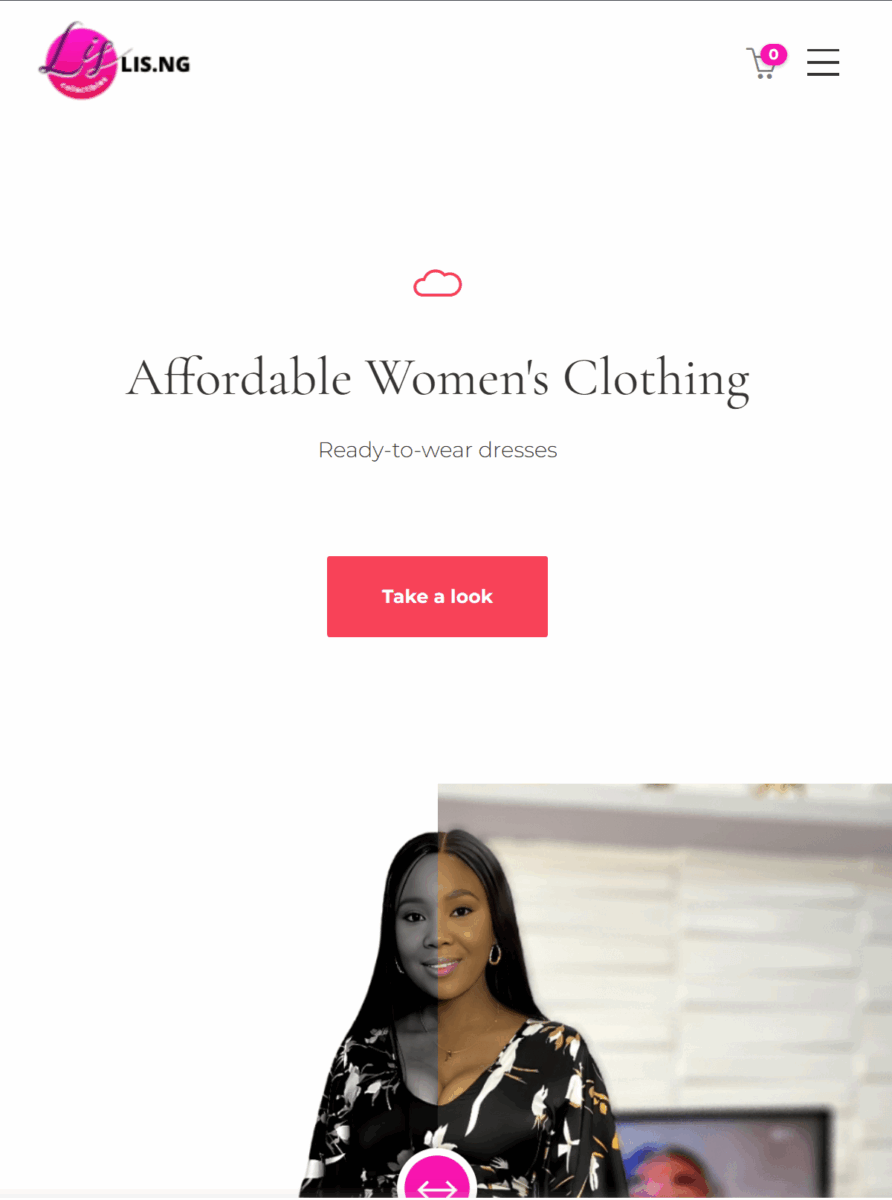
Around nine out of ten Nigerian searches happen on phones, often on mid-range devices running on 4G that behaves like 3G. If your site takes eight seconds to load, your customer is gone before your logo appears, and Google, watching them leave, ranks you lower for it. Compress every image before uploading (free tools like TinyPNG do this in seconds), remove decorative plugins and sliders you do not need, and choose decent hosting. Put a click-to-call button and a WhatsApp chat link where a thumb naturally rests, and display your address and hours plainly. Test yourself honestly: open your own site on mobile data, not office WiFi, and feel what your customer feels. Google’s free PageSpeed Insights tool will show you exactly what is slowing you down.
Common Nigerian Problems, and the Honest Fixes
| Problem | Solution |
|---|---|
| Cannot verify Google Business Profile; postcard never arrives | Choose video verification; record your signage, surroundings and operations in daylight |
| No physical shop customers can visit | Set up as a service-area business; hide the address, list the areas you serve honestly |
| Business not showing on search or Maps | Complete every profile field, confirm the primary category is correct, gather reviews weekly |
| Different names or numbers scattered across directories | Audit every listing against your saved NAP note and correct mismatches one by one |
| No website, or a very poor one | Run on a complete Google profile plus WhatsApp catalogue now; build a simple fast site when ready |
| Few reviews, or one bitter review sitting alone | Ask every happy customer with a direct link; reply to the negative one calmly and factually |
| Website crawls on mobile data | Compress images, cut plugins, upgrade hosting, retest on real mobile data |
How to Measure Whether It Is Working
Check three free dashboards monthly. Your Google Business Profile performance tab shows how many people saw you, called you, requested directions, or visited your site, and which searches brought them. Google Search Console shows which keywords your website appears for and where it ranks. Google Analytics shows what visitors do once they arrive. When you are ready for advanced tracking, tools like BrightLocal or Local Falcon will show your exact map ranking street by street.
But the measurements that matter most walk through your door. Count the customers who say “I saw you on Google.” Watch whether calls and WhatsApp messages from strangers increase month on month. That is the harvest; the dashboards only forecast the weather.
How Long Does Local SEO Take in Nigeria?
An honest answer, because this is where dishonest marketers hunt. A newly completed and verified profile can start appearing in Maps within days. Meaningful movement into the local pack for competitive searches typically takes four to twelve weeks of consistent work, faster in smaller cities where competition is thin, slower in saturated Lagos categories. Anybody promising you position one in one week is either lying or planning shortcuts that will get your profile suspended. Local SEO is farming, not gambling: plant properly, tend weekly, and the harvest compounds for years.
Quick Wins You Can Complete Today
Create or claim your Google Business Profile and start video verification. Write your official NAP in your phone notes. Add your full +234 phone number and real photos to the profile. Send your review link to two happy customers before you sleep. Submit your business to two Nigerian directories using the exact NAP. Open your website on mobile data and time how long it takes to load. Six small actions, one evening, and you are already ahead of most businesses in your city.
Final Words: Be Visible, Be Consistent, Be Helpful
Local SEO is the closest thing to free customer acquisition that exists for Nigerian businesses, and the current moment is unusually kind to beginners, because most of your competitors are still asleep. You do not need to be a tech expert. You need one properly built profile, one consistent identity everywhere, a steady stream of honest reviews, answers to your customers’ real questions, and the patience of a farmer.
And if you are not a business owner but a young Nigerian learning digital skills, everything on this page is also your training ground: offer to do these exact steps for one local business free, document the results, and you have the beginning of a portfolio that can earn in any currency. We wrote a complete walkthrough of that path in our guide, The Japa Alternative: How to Earn in Dollars From Your Bedroom in Nigeria.
Ready to Grow Your Business with Local SEO?
Do not wait for customers to find your competitors first. Let us help you show up in the right searches, in the right city, starting today.

[…] Local SEO in Nigeria: How to Rank Your Business in Your City […]