seogidi.com
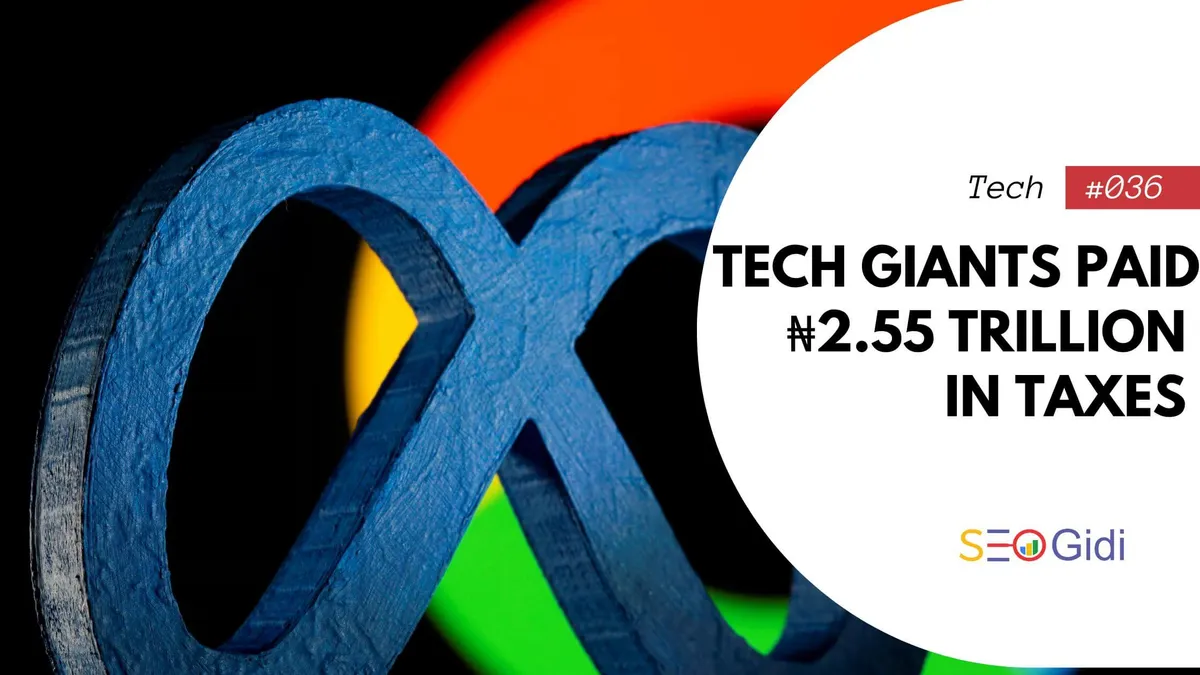
In December 2024, Nigeria’s IT regulator NITDA said foreign digital companies had paid more than ₦2.55 trillion (about $1.5 billion) in taxes in the first half of 2024, citing FIRS and National Bureau of Statistics data. Google, Microsoft and TikTok were among the companies named.
Since then the rules have changed. Nigeria’s tax reform laws, signed on 26 June 2025, took effect on 1 January 2026. FIRS has become the Nigeria Revenue Service. Rather than adding a separate digital services tax, the new Nigeria Tax Act taxes foreign tech firms through “significant economic presence” rules, withholding tax and 7.5% VAT on imported digital services.
Let’s gist about what the original number meant, what has changed, and what it means for Nigerian businesses that pay for Google, Meta or software subscriptions.
What NITDA reported in December 2024
The figure came in a statement from the National Information Technology Development Agency about compliance with its Code of Practice for Interactive Computer Service Platforms. NITDA announced the Code in 2022, jointly with the NCC and the NBC. According to Nairametrics’ report, the statement covered:
- Tax: over ₦2.55 trillion paid by foreign digital companies in H1 2024.
- Complaints: 4,125,283 registered complaints to platforms in 2023.
- Takedowns: 65.8 million pieces of content removed, with 379,433 restored after user appeals.
- Accounts: 12.09 million accounts closed or deactivated.
Many people called the tax figure record-breaking, and for a government looking beyond oil money, it was a welcome headline.
A correction worth noting
Our first version said X and TikTok were among the companies that paid. About a week later, NITDA’s own compliance report said TikTok and X had failed to comply with tax filing requirements. NITDA had commended them for following the Code of Practice, which is about content and user safety. Tax compliance was a separate question, and for those two platforms the answer was no.
What has changed since: the Nigeria Tax Act 2025
On 26 June 2025, President Tinubu signed four laws: the Nigeria Tax Act, the Nigeria Tax Administration Act, the Nigeria Revenue Service (Establishment) Act and the Joint Revenue Board (Establishment) Act. They started on 1 January 2026, and the old FIRS became the Nigeria Revenue Service (NRS).
For foreign tech companies, four parts matter most.
| Rule | What it does |
|---|---|
| Significant economic presence (SEP) | A non-resident company earning value from Nigerian users can be taxed here without an office. The old ₦25 million threshold from the 2020 SEP Order is gone from the Act. |
| VAT on digital services | Imported digital services attract 7.5% VAT. Foreign suppliers must register, charge and remit it. |
| Withholding tax | Payments from Nigeria can trigger withholding at 5% to 20%, and the rate may double if the foreign company has no tax ID. |
| Minimum top-up tax | Multinationals with global revenue above €750 million face a 15% minimum effective tax rate, in line with the OECD’s Pillar Two. |
Sources for the table: WTS Blackwoodstone via Mondaq for SEP, VAT and the top-up tax, and KPMG for withholding. The detailed SEP rules depend on a regulation from the Minister of Finance, so check the current version before relying on any threshold.
How VAT on foreign digital services works
VATCalc’s summary of the 2026 rules says non-resident suppliers with more than USD 25,000 a year in Nigerian turnover must register for VAT through the NRS’s simplified compliance portal. Usually the Nigerian customer withholds and remits the VAT. The NRS can also appoint the foreign supplier or platform to collect it instead.
In practice, if your business pays for foreign ads, cloud hosting or software, look at your invoices. You may see VAT added by the supplier, or you may be responsible for accounting for it yourself.
How ₦2.55 trillion can help Nigeria
The original argument still stands, with one condition: the money has to be visible in public services.
More money for projects
Revenue at this scale can fund roads, hospitals and schools, and reduce how much the government needs to borrow.
Less dependence on oil
The digital economy is growing. Taxing it fairly is one of the few new revenue sources that grows as Nigerians spend more online.
A seat in the global conversation
Many countries are trying to tax tech giants on where users are, not where companies sit. Nigeria’s SEP rules put it in that group.
The risks we flagged, two years on
Could regulation scare investors?
The pressure is real. In April 2025, a Nigerian tribunal upheld the FCCPC’s $220 million fine against Meta and WhatsApp over data-sharing practices. And on 26 June 2026, US President Donald Trump threatened 100% tariffs on countries that impose digital services taxes on American tech firms. That threat named European countries, not Nigeria, and Nigeria’s approach is built on income tax and VAT rather than a standalone digital tax. Still, any African country taxing US platforms now does so with that risk in the background.
The balance we argued for in 2024 matters more now: collect what is owed, with rules that are clear and stable enough that companies keep investing.
Local startups still need support
The new tax laws apply to Nigerian companies too. If the system collects billions from foreign platforms while local startups struggle with funding and infrastructure, Nigeria will keep depending on foreign companies. Founders weighing their options can read our piece on bootstrapping versus fundraising.
Online content worries
The same NITDA report counted 65.8 million takedowns and 12.09 million closed accounts. Some of that removes harmful content. Some may silence real voices. It still deserves scrutiny.
What it means for Nigerian businesses
If you run a business in Lagos, Abuja or anywhere else in Nigeria, the reforms touch you in three ways.
- Your tools may cost more. VAT on foreign digital services can raise the real price of ads, hosting and software. Factor it into marketing budgets.
- Organic channels look better. When paid reach gets more expensive, search traffic you have earned becomes more valuable. Google still carries about 98% of search referrals in Nigeria, according to our State of Search in Nigeria 2026 research. Our piece on growing without ads covers how.
- Paid and organic should be weighed together. Our comparison of social media ads and search ads helps decide where each naira works hardest.
For fintechs, the VAT and payment-reporting rules add another layer. Our fintech SEO service works with companies already handling that.
Frequently asked questions
Does Nigeria have a digital services tax?
Not as a separate tax. Nigeria taxes foreign digital companies through significant economic presence rules in the Nigeria Tax Act 2025, plus withholding tax and 7.5% VAT on imported digital services. The rules took effect on 1 January 2026.
Who collects tax from Google, Meta and other foreign tech firms in Nigeria?
The Nigeria Revenue Service, which replaced FIRS under the 2025 reforms. NITDA’s role is the Code of Practice, which covers how platforms handle content and users. The ₦2.55 trillion figure it published came from FIRS and NBS data.
Did X and TikTok pay tax in Nigeria?
NITDA’s December 2024 compliance report said TikTok and X had failed to comply with tax filing requirements, even though both followed the content rules of its Code of Practice.
Do Nigerian businesses pay VAT on Google and Facebook ads?
Imported digital services attract 7.5% VAT under the 2026 rules. Depending on how the supplier is registered, the VAT may appear on your invoice, or your business may need to account for it. Ask your accountant to check your ad invoices.
If rising ad costs are pushing you towards search, our SEO company in Nigeria page explains how we work, and the free SEO audit is the easiest first step.
Sources
- Nairametrics: Google, Microsoft, TikTok, others pay ₦2.55 trillion taxes in H1 2024 (4 December 2024)
- Tribune: Google, Meta, X, others paid ₦2.55trn taxes to FG in six months
- Sahara Reporters: NITDA accuses TikTok and X of failing to comply with taxes (13 December 2024)
- Nairametrics: President Tinubu signs four tax reform bills into law (26 June 2025)
- Mondaq (WTS Blackwoodstone): Taxation of digital activities under the Tax Reform Acts 2025
- KPMG: Nigeria Tax Act 2025 reforms (30 June 2026)
- VATCalc: Nigeria VAT obligations for non-resident digital service providers
- Nairametrics: Tribunal orders Meta and WhatsApp to pay $220 million fine (25 April 2025)
- Al Jazeera: Trump threatens tariffs over digital taxes (26 June 2026)
Reports, articles and industry research, by email
Original Nigerian search data a few times a year, new guides as they are published, and a short note when Google or Meta changes something that affects businesses here. No sales emails, unsubscribe in one click.

Want this done for your business?
Get a free SEO audit: rankings, technical issues, competitor gaps and the quickest wins, within 48 hours.