seogidi.com
For Black Friday 2024, Google turned its US homepage and search results into a shop window. A link on google.com pointed shoppers to a Google Shopping deals hub, where discounts from many retailers sat side by side with prices, price history and reviews. Two years later the hub looks like a first step: Google now lets shoppers in the US describe what they want in AI Mode, ask Google to phone local stores, and let Google complete the purchase for them.
For Nigerian online stores, none of this has fully arrived yet. But the direction is clear, and the businesses that prepare their product data now will be the ones Google can show when it does. Let me gist you on what happened, what has changed since, and what to do about it.
What Google did for Black Friday 2024
Black Friday is the shopping Olympics. Discounts fly like rice at a wedding, and everyone is out hunting. In 2024 Google made a serious move to be the first stop for that hunt.
The deals hub was front and centre
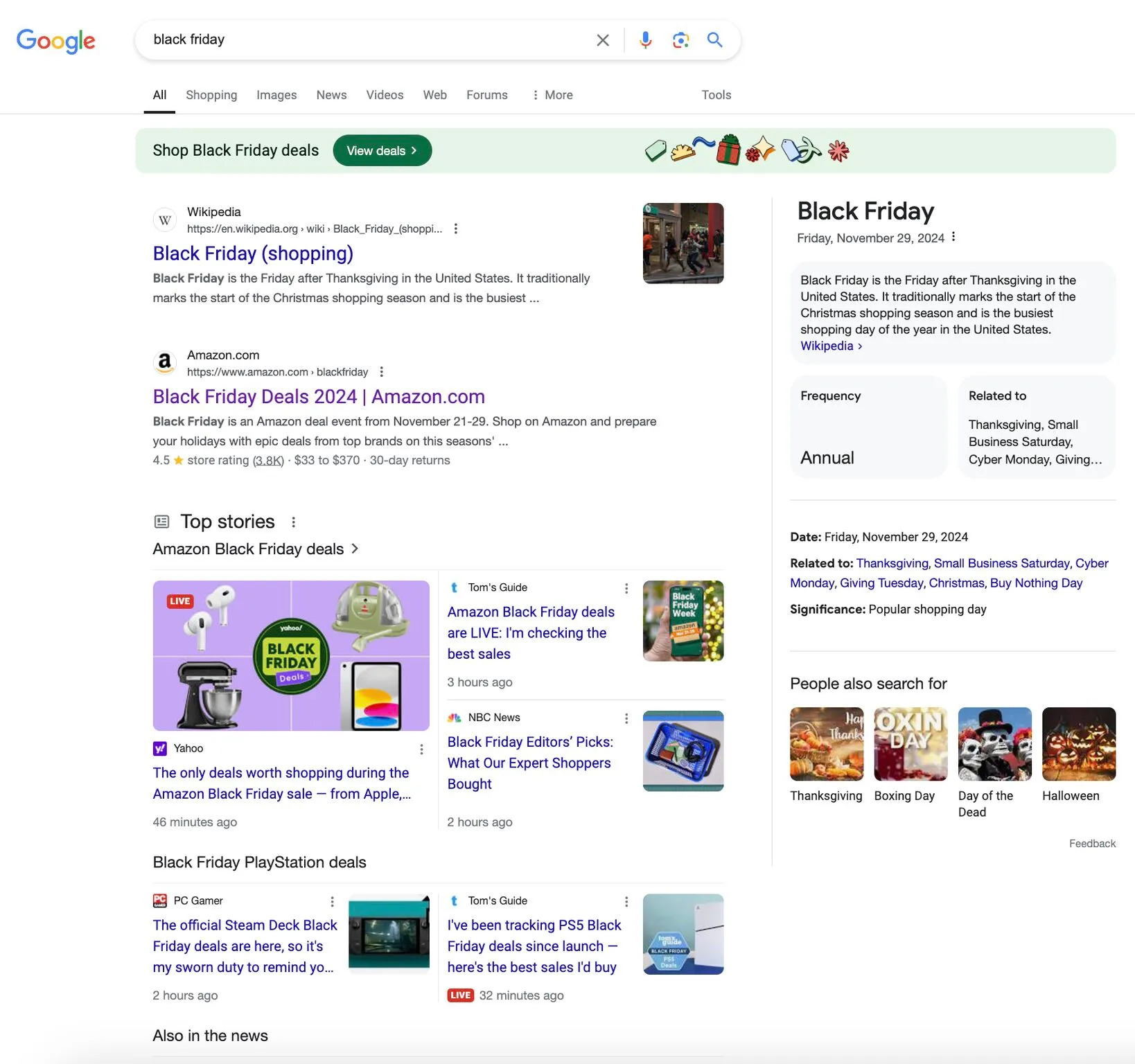
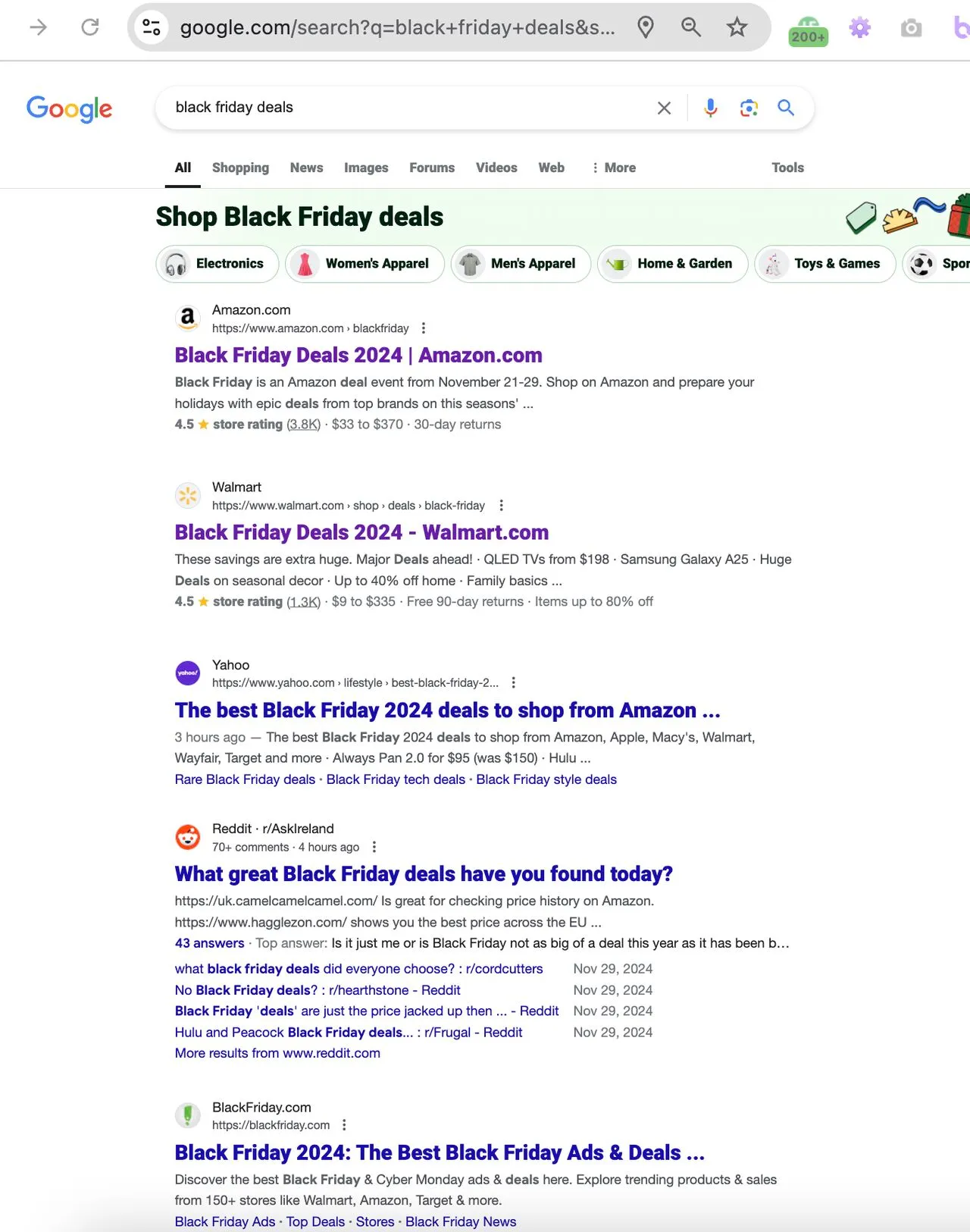
US visitors to Google’s homepage saw a link that read: “The Google Shopping deals hub is your one-stop shop this Black Friday.” Searches for “Black Friday” or “Black Friday deals” showed banners for the hub at the top of the results. No scrolling needed.
It is like going to your tailor to pick up an outfit, and they are suddenly offering you shoes, bags and perfume too.
It worked like a proper shopping site
Inside the hub, deals were grouped into categories:
- Electronics
- Women’s apparel
- Home and garden
- Toys
- Sports and outdoors
Think of it as Google’s own online Balogun Market, but for Black Friday. Listings showed images, prices, discounts and star ratings. Clicking a product opened a product knowledge panel with the details, and from there you could go to the merchant’s product page to buy.
Android Central’s coverage at the time describes the same deals page, with price comparisons and price histories, plus Google Lens price checks for people standing in physical stores. All of it ran on Google’s Shopping Graph, then described as more than 45 billion product listings.
Filters and ads sat on top
Click “Deals on Electronics” and you got a page that felt like Jumia’s category pages:
- A refine-results sidebar for price range and brand.
- Top filters to sort by newest or biggest discount.
- Product listing ads above the organic deals. These are paid placements, and a clear way for Google to earn from the traffic.
The whole setup felt like Google had built its own Konga or Amazon directly into search.
Why it mattered for online stores
In the old model, Google sent shoppers to a store’s website. With the hub, Google became the first stop. A US retailer that was not in those product listings could lose a deal hunter who never left Google.
For US retailers the lesson was simple: keep your product feed in Google Merchant Center clean, make sure your sale prices show correctly, and decide how much to spend on Shopping ads around the peak days.
What has changed since 2024
The deals hub was the start. Since then Google has moved from showing deals to helping people buy.
| Date | What Google launched | Where |
|---|---|---|
| Nov 2024 | Shopping deals page, price history, Lens price checks | US |
| 13 Nov 2025 | Conversational shopping in AI Mode, shopping in the Gemini app, “Let Google Call”, agentic checkout | Mostly US |
| 11 Jan 2026 | Universal Commerce Protocol, with checkout inside AI Mode and Gemini planned | Announced at NRF in the US |
November 2025: AI Mode shopping and agentic checkout
On 13 November 2025, Google announced four holiday shopping tools:
- Conversational shopping in AI Mode. You describe what you want in plain language and get shoppable images, comparison tables, prices, reviews and stock information.
- Shopping in the Gemini app, available to Gemini users in the US.
- Let Google Call. Google phones nearby stores to check stock, prices and promotions, then sends you the results. Rolled out in the US for toys, health and beauty, and electronics.
- Agentic checkout. You track a price, and when it drops within your budget, Google can buy the item on the merchant’s site with Google Pay, after you confirm. It started with US merchants such as Wayfair, Chewy and some Shopify stores.
Google said its Shopping Graph had grown to more than 50 billion product listings, with 2 billion updated every hour.
January 2026: a standard for AI shopping
At the National Retail Federation conference on 11 January 2026, Google unveiled the Universal Commerce Protocol, a shared framework that lets AI agents handle product discovery, checkout and after-sales support. Google said it would add it to eligible listings in AI Mode and the Gemini apps, so shoppers can buy without leaving the conversation.
Put simply: in 2024 Google wanted to be the mall. In 2026 it wants to be the shop assistant and the till.
Is this coming to Nigeria?
Not yet, and probably not first. Most of these features launched in the US, and Google has not announced dates for Nigeria.
There is a more basic gap. Google’s Merchant Center help page listing the countries where you can show products for free on Google names South Africa as the only African market, as of November 2026. Nigeria is not on that list. So a store in Lagos cannot simply upload a naira feed and appear in free Google Shopping listings at home.
Meanwhile, Nigerians already use Google to find deals, compare prices and check reviews. Our State of Search in Nigeria 2026 research found Google carries about 98% of search referrals in Nigeria, and three quarters of web traffic is on mobile. When Google’s shopping tools do expand here, platforms like Jumia and Konga will face the same pressure US retailers faced in 2024.
What Nigerian online stores should do now
You do not need to wait for the US features to reach Lagos. The groundwork is the same.
- Win the organic results for deal searches. Build a permanent Black Friday page on your site (for example
/black-friday/) and update it every year, instead of creating a new URL each November. It keeps the links and history it earns. - Mark up your products. Add product structured data with price, availability and reviews. It is what Google and AI assistants read when they compare offers.
- Write product pages for questions, not just keywords. AI Mode answers questions like “best blender under ₦80,000 for smoothies”. Pages that state specs, prices in naira, delivery areas and return terms plainly are easier to quote.
- Use Merchant Center where it applies. If you ship to the UK, US or another supported country, a feed for that market can put you in Google Shopping there, which matters for diaspora customers. Our guide to reaching Nigerians abroad before December covers that timing.
- Plan around the Nigerian calendar. Black Friday is only one of the buying peaks in the Nigerian year, and it is not always the biggest for your category. The Nigerian search calendar maps the others.
For a deeper playbook, read our guide to SEO for e-commerce websites in Africa or see our ecommerce SEO service.
Frequently asked questions
What is the Google Shopping deals hub?
It is a Google Shopping page, launched for the US Black Friday season in 2024, that gathers discounted products from many retailers in one place, with prices, price history, reviews and filters. Google promoted it on its homepage and at the top of Black Friday searches.
What is Google’s agentic checkout?
It is a feature announced in November 2025 that lets a shopper track a product’s price and, once it falls within budget, have Google buy it on the merchant’s site using Google Pay. Google asks for confirmation first. It launched in the US with selected merchants.
Can Nigerian businesses list products on Google Shopping?
As of November 2026, Google’s list of countries for free product listings does not include Nigeria. Nigerian businesses that ship to supported countries can list products for those markets. At home, the route to Google is organic search, structured data and a strong Google Business Profile.
Will AI shopping reduce traffic to online stores?
For simple, price-led purchases, probably yes, because more of the comparison happens inside Google. Stores that keep accurate product data and clear policies are more likely to be the one Google recommends or buys from.
Google is not playing. If you want to know whether your store is ready for this season’s searches, request a free SEO audit.
Sources
- Android Central: How Google will help you score Black Friday deals (25 November 2024)
- Google: Let AI do the hard parts of your holiday shopping (13 November 2025)
- Skift: Google’s new tech lets AI agents handle checkout (11 January 2026)
- Google Merchant Center Help: Show your products for free on Google
Reports, articles and industry research, by email
Original Nigerian search data a few times a year, new guides as they are published, and a short note when Google or Meta changes something that affects businesses here. No sales emails, unsubscribe in one click.

Want this done for your business?
Get a free SEO audit: rankings, technical issues, competitor gaps and the quickest wins, within 48 hours.