seogidi.com

E-commerce SEO in Africa comes down to four things: target the exact words local shoppers type, build category and product pages that answer them, make the store fast and trustworthy on a cheap Android phone, and measure sales, not just visits. A Lagos store that does these well can win searches that Jumia and Jiji do not cover properly, especially specific product, price and location searches.
This guide walks through each part, with the details that matter in African markets: mobile data costs, payment trust, local language and the marketplaces you are competing against.
Why SEO matters for African online stores
Most African online stores lean on Instagram, WhatsApp and paid ads. Those work, but they stop the moment you stop posting or paying. Search traffic keeps coming.
The opportunity is still wide open. In Nigeria, our State of Search in Nigeria 2026 research found that online retail is estimated at 0 to 5% of total retail, and only 7% of small businesses surveyed in 2022 ran an online store. Google carries about 98% of search engine referrals in the country. Shoppers are searching, and few local stores are set up to be found.
Keyword research for African shoppers
Use the words people actually type
Shoppers in Lagos search “phone price in Nigeria”, “ankara fabric wholesale” or “generator for sale in Abuja”. Shoppers in Nairobi may search in English, Swahili or a mix. Product names, local slang and price-led searches matter more than the polished terms in your supplier catalogue.
Start with Google Keyword Planner, set to your country, and add what you hear from customers on WhatsApp and the phone. If you have a paid tool, Semrush’s Personal Keyword Difficulty helps you spot terms your store can realistically win.
Prioritise price, location and long-tail searches
African shoppers search with price and place in mind. “Samsung A15 price in Nigeria”, “office chair Lekki” and “baby car seat Accra” are each smaller than the generic product name, but each is closer to a sale and less dominated by global giants.
Watch the seasons
Demand moves with the calendar: back-to-school, Ramadan and Eid, Detty December, Black Friday. Plan category and gift-guide pages a few months ahead. Our Nigerian search calendar maps the main peaks.
Category and product pages that rank
Category pages carry most of the weight
Category pages such as “men’s sneakers” or “solar inverters” usually target the most valuable searches. Give each one a clear title tag, a short introduction above the products written for buyers, and filters that do not create thousands of near-duplicate URLs.
Write your own product descriptions
Most African stores paste the manufacturer’s description, which means hundreds of other sites have the same text. Write your own. Cover what local buyers ask: does it work with our power supply, what is the warranty, how long does delivery take to Port Harcourt, is there pay on delivery.
Get the basics right on every page
- A unique title tag and meta description with the product name and a buying cue, such as price or delivery area
- Clear photos you took yourself where possible, with descriptive alt text
- Price in local currency, visible near the top
- Stock status and delivery information
Add product structured data
Product markup tells Google the price, availability and reviews on a page. Google’s product structured data documentation explains that pages where customers can buy directly can use merchant listing markup, which supports shipping and return details. Shopify, WooCommerce and most modern platforms add basic markup automatically, but check it with Google’s Rich Results Test.
Technical SEO: speed on a phone matters most
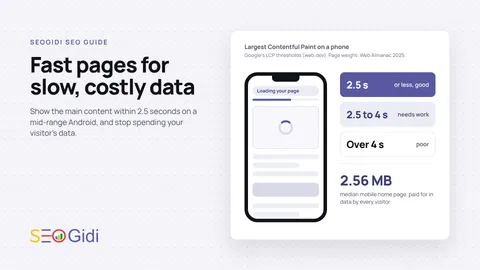
Three quarters of Nigerian web traffic is on mobile, according to our research, and many shoppers browse on prepaid data. A heavy store costs them money as well as time.
- Compress images. Product photos are usually the biggest files on the page. Serve WebP and size them to the screen.
- Cut unnecessary apps and scripts. Every chat widget, pop-up and tracking pixel adds weight.
- Use HTTPS everywhere. Shoppers will not enter card details on a page their browser marks as not secure.
- Fix crawl problems. Broken links, endless filter URLs and duplicate product pages waste Google’s attention. A regular crawl with a tool such as Screaming Frog catches these, and its AI integration can also draft missing alt text at scale.
Trust signals that turn visits into orders
Trust is the biggest conversion problem for African online stores. Many shoppers have been burned before.
- Show recognised payment options clearly: Paystack, Flutterwave, M-Pesa or card, plus pay on delivery where you offer it.
- Display a physical address, phone number and WhatsApp contact.
- Publish clear delivery times and a returns policy.
- Collect and show real reviews, on your site and on your Google Business Profile.
These details do not only help conversions. They answer questions shoppers type into Google before buying, such as “is [store name] legit”.
Content that brings shoppers in
Blog content works for stores when it targets buying questions. “How to choose an inverter for a 3-bedroom flat”, “Best phones under ₦300,000” or “How to measure for a made-to-order agbada” each bring shoppers who are close to a decision. Link from each guide to the relevant category or product.
Local stories help too: customer photos, behind-the-scenes posts from your warehouse in Ikeja, or the artisans who make your products. Our guide to content marketing strategies that drive organic traffic covers how to plan these.
Links and local visibility
- Google Business Profile: if you have a showroom or pickup point, set up a profile so you appear in map results for “near me” searches.
- Local directories and associations: listings in reputable business directories and trade bodies help Google understand where you operate.
- Partnerships: collaborate with local creators, bloggers and complementary brands for features and links. A baby store and a parenting blogger, for example.
- PR: Nigerian and African business media cover new launches, funding and useful data. A simple price index for your product category can earn coverage and links.
Choosing a platform
Shopify, WooCommerce and BigCommerce all handle the SEO basics: editable titles and descriptions, clean URLs, sitemaps and mobile-friendly themes. WooCommerce gives you the most control and the lowest software cost, but needs good hosting to stay fast. Shopify is easier to run but limits some URL structures. Whatever you choose, check it supports naira or your local currency and your preferred payment gateway.
How to measure e-commerce SEO results
Set goals before you start, then track:
| Metric | Where to find it | What it tells you |
|---|---|---|
| Organic clicks and impressions | Google Search Console | Whether more people see and click your pages |
| Rankings for priority keywords | Search Console or a rank tracker | Progress on the searches that matter |
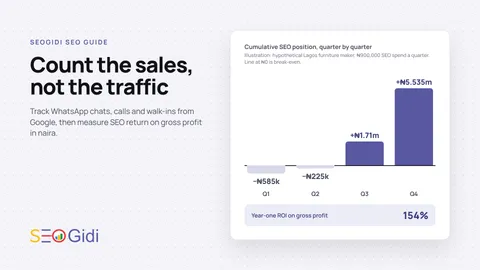
| Organic revenue and orders | Google Analytics with e-commerce tracking | Whether SEO is paying for itself |
| Conversion rate from organic | Google Analytics | Whether the right people are arriving |
Be patient and realistic. Local and long-tail product searches often move in 4 to 10 weeks. Competitive category terms usually take 4 to 8 months, and no one can promise a specific position.
Is SEO worth it for an e-commerce store in Africa?
For most stores, yes. Paid ads get more expensive as more stores compete for the same shoppers, while traffic from well-built product and category pages keeps coming without a cost per click. SEO also lowers your dependence on Instagram’s algorithm and marketplace fees.
It works best alongside ads, not instead of them in the first months. Use ads to learn which products and searches sell, then build SEO around them.
Frequently asked questions
How long does e-commerce SEO take to show results?
Specific product and local searches can improve in 4 to 10 weeks. Competitive category terms usually take 4 to 8 months, depending on your site’s starting point and competition.
Can a small online store outrank Jumia or Jiji?
On broad terms, rarely. On specific product, price and location searches where the marketplaces have thin or duplicate pages, yes, a focused store with better pages can rank above them.
What is the most important SEO fix for an African e-commerce site?
Usually mobile speed, followed by unique product and category content. A slow store loses shoppers before Google’s ranking even matters.
If you run an online store and want a plan built for your market, our SEO for e-commerce service starts with an audit of your product and category pages.
Sources
Reports, articles and industry research, by email
Original Nigerian search data a few times a year, new guides as they are published, and a short note when Google or Meta changes something that affects businesses here. No sales emails, unsubscribe in one click.

Want this done for your business?
Get a free SEO audit: rankings, technical issues, competitor gaps and the quickest wins, within 48 hours.