seogidi.com
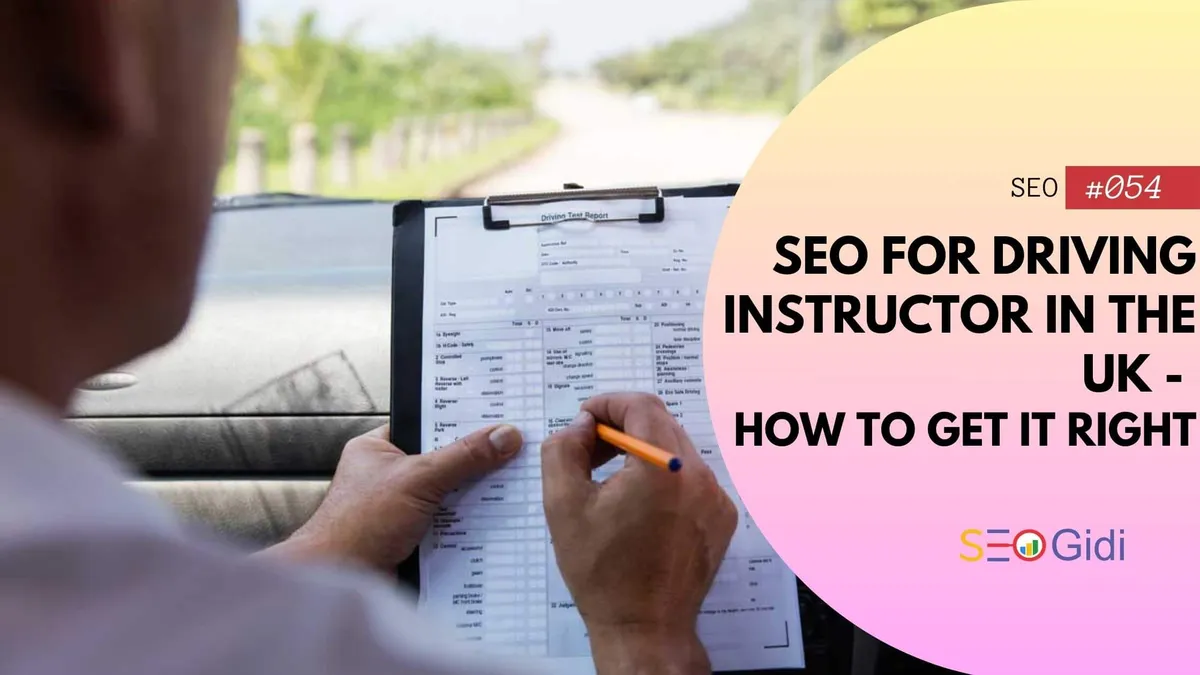
Most learners in the UK find an instructor the same way: they type “driving lessons near me” or “automatic driving instructor [town]” into Google and ring one of the first three names on the map. SEO for a driving instructor is the work of being one of those names. That means a complete Google Business Profile with the right service area, a steady stream of reviews from pupils, and a simple website with a page for each type of lesson and each area you cover.
You do not need a big budget. A sole-trader ADI in Coventry or Cardiff can outrank a national franchise for local searches, because Google weighs closeness and local trust heavily. Here is how to do it.
What learners search for
Learners and their parents search in specific, local terms. Build your site around these, not around “driving lessons UK”, which you will never rank for and would not want anyway.
| What they type | What it means for you |
|---|---|
| “driving lessons near me”, “driving instructor [town]” | Decided mostly by your Google Business Profile and where you are based. |
| “automatic driving lessons [town]” | A separate page on your site, and a service on your profile. |
| “female driving instructor [town]” | Worth a mention and a page if it applies to you. Many learners look for this. |
| “intensive driving course [town]”, “crash course” | A page with clear details of hours, cost and test availability. |
| “Pass Plus [town]”, “motorway lessons”, “refresher lessons” | Smaller searches, but people ready to book. |
| “how many driving lessons do I need” | A question to answer in a short guide that links to your booking page. |
Google Keyword Planner gives rough volumes, and Google’s autocomplete shows how people phrase things around you. Your own enquiries are the best data: write down the exact words people use when they call.
Set up your Google Business Profile properly
For local searches, your Google Business Profile does more than your website. Most driving instructors do not have premises customers visit, so set the profile up as a service-area business. Hide your home address and list the towns or postcodes you cover.
- Category: “Driving school” is usually the primary category. Add “Driving instructor” or related categories if they appear for your listing.
- Services: list manual lessons, automatic lessons, intensive courses, Pass Plus and refresher lessons, each with a short description.
- Photos: your car, you with pupils who have agreed to it, pass photos with permission, and the local test routes area.
- Hours: real availability, including evenings and weekends if you teach then.
- Posts: short updates when you have free slots or a new automatic car.
Two features older guides still mention are gone. Google retired chat and call history from Business Profiles in July 2024, so make sure your phone number and booking link do the work. The public Q&A section on Maps has been replaced by an AI “Ask” button that answers from your profile and reviews, which is another reason to fill in services in full.
Reviews from pupils who passed
A new learner choosing between three instructors will read reviews. Pass day is the natural moment to ask, but ask every pupil when they finish with you, not only those who passed first time. Google’s review policy does not allow incentives for reviews or selectively asking for positive ones.
Reply to every review by name. A reply to a mixed review that is calm and specific (“Sorry the lesson times clashed with your shifts. I now offer early mornings”) often persuades more people than another five-star rating.
Get on the official register and the right directories
The DVSA’s find a driving instructor service lists approved driving instructors who opt in, and lets learners check grades. If you are an ADI and you are not on it, you are missing a trusted source of enquiries. Then cover the directories learners and parents use:
- Yell, FreeIndex and Bing Places
- Facebook business page and local community groups
- Any franchise directory if you are part of a driving school group
- Local school, college or sixth-form noticeboards and websites
Keep your name, phone number and service area identical everywhere. Small differences, such as an old mobile number on one listing, make it harder for Google to trust the details.
A simple website that answers the booking questions
Your website does not need to be fancy. It needs to answer what a learner or parent wants to know before they ring:
- Prices for single lessons and block bookings, with what is included.
- Manual or automatic, and the car you teach in.
- The areas you cover and the test centres you use.
- Your ADI status, pass rate if you track it accurately, and reviews.
- A clear way to book or get on your waiting list.
Give each main service its own page, with a title such as “Automatic Driving Lessons in Coventry | [Your Name]”. If you cover several towns, a page for each is useful only when you have something real to say about it: the local test centre, typical routes, roundabouts that catch people out. A copied page with the town name swapped does more harm than good.
Content learners actually look for
Guides answer the questions learners and parents type into Google, and they keep bringing in visits for years. Good topics for a UK instructor:
- “How many driving lessons do I need?”
- “Manual or automatic: which should I learn in?”
- “What happens on the driving test at [local test centre]?”
- “Can I start lessons before my theory test?”
- “How to book and manage your own driving test”
That last one is especially timely. DVSA rules that came in during 2026 mean that from 12 May 2026 only the learner can book or manage their car test, instructors can no longer do it for pupils, and learners get two changes per booking instead of six. Many learners and parents are confused by this. A clear guide on your site, explaining how pupils add your instructor reference number when they book, helps your pupils and is the kind of local, useful page that earns links and searches.
Links from your community
Links from local sites help Google see you as part of the area. They usually come from real relationships:
- Sixth forms and colleges that share lists of local instructors.
- Local news stories, for example on test waiting times or new rules.
- Community sponsorships, such as a junior football kit.
- Garages and car dealers you have a referral arrangement with.
Track what brings bookings
- Google Business Profile performance: calls, website clicks and searches that found you.
- Google Search Console: which pages get clicks and for which searches.
- Ask every new pupil how they found you, and keep a simple tally.
Frequently asked questions
How long does SEO take for a driving instructor?
Changes to your profile and new reviews can lift your map position within weeks if your area is not crowded. In big cities with many instructors, expect several months of steady work. Nobody can promise a set position.
Is a website really needed?
You can get enquiries from a Google profile alone, but a website lets you rank for each lesson type and town, show prices, and take bookings while you are teaching. A small site with five or six useful pages is enough for most instructors.
Does social media help with SEO?
Not directly. Pass photos and tips on Instagram, Facebook or TikTok keep you in mind, bring people to search your name, and can feed reviews and referrals.
Can I rank in towns I do not live in?
As a service-area business, your visibility is strongest near where Google places you, and weaker further out. Pages about the test centres and towns you cover, plus reviews from pupils in those places, help you reach a little further.
For the deeper principles of ranking in the map pack in any city, read our guide to local SEO and ranking in your city, and if you rely on referrals today, growing without ads shows why search compounds over time. If you want an outside view of your site and profile, request a free SEO audit.
Sources
- GOV.UK: Changes to driving test booking rules in 2026
- GOV.UK: Find driving schools, lessons and instructors
- Google Maps user contributed content policy
- Search Engine Roundtable: Business Profile call history and chat going away
- Search Engine Roundtable: Google removing Q&A in Maps for AI-powered Ask button
Reports, articles and industry research, by email
Original Nigerian search data a few times a year, new guides as they are published, and a short note when Google or Meta changes something that affects businesses here. No sales emails, unsubscribe in one click.

Want this done for your business?
Get a free SEO audit: rankings, technical issues, competitor gaps and the quickest wins, within 48 hours.