seogidi.com

To start a digital business, you do not need to be fearless. You need a clear reason, one offer people will pay for, a cheap way to test it, a way to get paid online and a way for customers to find you. Everything else you learn by doing.
You have probably been dreaming about this for a while, and every time you get close, doubt creeps in. “What if it doesn’t work?” shows up like an uninvited guest. We have all been there. Let me gist you how to move from thinking about it to actually doing it, one step at a time.
Step 1: Define your why (because the japa life isn’t cheap)
First things first: why do you want to start this business? Maybe you are tired of saying “God, when?” every time you see someone cashing out online. Maybe you have a solution that will really help people. Either way, your why is your ginger. It keeps you going when the challenges come, and they will.
Do not just chase vibes. Set a clear goal you can measure:
- Side income: “₦200,000 a month extra within a year.”
- Full-time business: “Replace my salary before I resign.”
- Dollar earnings: “Land three foreign clients for my skill.” If that is you, read the japa alternative: how to earn in dollars from your bedroom.
Step 2: Pick your hustle (what exactly are you selling?)
Not every digital business is the same, so do not rush to copy what others are doing. Most fall into four types:
| Type | Examples | Startup cost | How fast you can earn |
|---|---|---|---|
| Services | Graphic design, social media management, copywriting, web development | Low: your skill and a laptop | Fast, from your first client |
| Physical products sold online | Fashion, beauty, food, gadgets via Instagram, WhatsApp or Jiji | Medium: stock and delivery | Medium |
| Digital products | Courses, templates, ebooks | Low to medium: your time | Slower, needs an audience |
| Content and media | YouTube, TikTok, newsletters | Low | Slow, but it compounds |
Pick something that matches your skills and interests. When the going gets tough, it is easier to push through when you enjoy the work. If you have no money at all, services are usually the quickest way to earn while you build.
Step 3: Conquer your fears (because you are bigger than “what if”)
Fear will always be there. “What if nobody buys? What if I fail? What if my village people are working overtime?” Those what-ifs are just noise trying to distract you.
- Everyone starts somewhere. Your favourite tech bros and business moguls all started small.
- Failure is not the end. It is data. Use it to adjust your plan.
- Make the first step so small it is hard to refuse: one post, one pitch, one sale.
Take a deep breath and start. No pressure, just small small wins.
Step 4: Do your research (because guesswork isn’t a business plan)
This part is not negotiable. Know the basics before you spend money.
- Who is your target customer? If you answer “everyone”, you do not know yet. Name an age group, a city and a problem.
- What are competitors doing? Study their prices, reviews and complaints. Their customers’ complaints are your opportunity. Study them, but do not copy them.
- What are people searching for? Google Trends and Google’s own search suggestions show what people actually type. Google Keyword Planner is free and shows rough monthly search volumes.
- How much will it cost to start? Be realistic o. Count everything, from data subscription and hosting to delivery and transaction fees.
Then test before you build. Post the offer, take a few pre-orders or land one client before you spend on stock or a big website. Proof first, spending second.
Step 5: Set up the business properly
A few basics make you look serious and protect you later:
- Register the business name with the Corporate Affairs Commission once you have proof people will buy. It makes it easier to open a business bank account and deal with bigger clients.
- Open a separate account so business money does not disappear into personal spending.
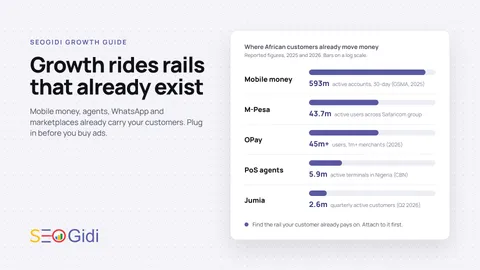
- Set up online payments. Payment gateways such as Paystack and Flutterwave let small businesses take payments online and send payment links you can drop into WhatsApp chats.
- Write down your prices and policies for delivery, refunds and turnaround time, so you are not making them up per customer.
Step 6: Build your digital presence (your online CV)
If customers cannot find your business online, for most of them it does not exist. Here is how to show up:
- Pick a clear name that says what you do and is easy to spell.
- Choose one or two social platforms where your customers already spend time: Instagram and TikTok for fashion, beauty and food, LinkedIn for B2B services. Do not try to be everywhere.
- Set up WhatsApp Business with a catalogue and quick replies.
- Create a Google Business Profile if you serve a city or area. It is free and puts you on Google Maps. Our guide to local SEO in Nigeria walks through it.
- Build a simple website once you have a few sales. Social pages can disappear with one account ban. A website is the only online space you fully own. You can start on WordPress or Wix, or get a professionally built website in Nigeria.
AI assistants matter too. SEOGidi’s State of Search in Nigeria 2026 research found that 84% of online Nigerians use generative AI, so a clear, consistent description of your business across your website and profiles helps both people and AI tools understand what you offer.
Gen Z: memes, challenges and relatable posts work for connecting with your audience. Millennials: we know you love LinkedIn posts that scream “I’m professional”, but do not be too stiff. Find the balance.
Step 7: Start marketing (because visibility = money)
Nobody can buy from you if they do not know you exist. Push your hustle like your life depends on it.
- Show your work. Reels, TikToks, before-and-after photos and customer reviews do more than ads at the start.
- Tell your network. Friends and family might not buy, but they will share.
- Join communities where your customers already hang out: WhatsApp groups, Facebook groups, X spaces, Nairaland threads.
- Ask every happy customer for a review and a referral.
Be consistent, post useful things and slide your offers in naturally. Nobody likes a hard sell. If you have no ad budget, read no budget for ads? good, dig the borehole instead for the long game.
Step 8: Be ready to learn and adjust
Nobody gets it perfect on day one. That is not failure, it is the process. Gather feedback, watch what works and adjust. Do not get too attached to your first idea. If something is not working after a fair test, change it.
Track a few simple numbers every month: enquiries, sales, where customers found you, and how many come back. They tell you what to do more of.
Frequently asked questions
How much does it cost to start a digital business in Nigeria?
A service business can start with almost nothing beyond a phone or laptop, data and your skill. Selling physical products needs money for stock and delivery. Start with the smallest version that lets you make your first sale, then reinvest.
What is the easiest digital business to start?
For most beginners, selling a skill as a service: design, writing, social media management, video editing or virtual assistance. You can earn from your first client without building a product first.
Do I need a website to start an online business?
Not on day one. Social media and WhatsApp can carry your first sales. Once you have customers, a website gives you a home you control and lets people find you through Google search.
How do I overcome the fear of starting a business?
Make the first step tiny and the cost of failure small. Test with one offer, one post or one client. Each small result, good or bad, gives you data and makes the next step easier.
Final words: vibes and Inshallah won’t work without strategy
It is fine to feel unsure at the start. What matters is that you start. AI tools make content and admin faster, payment tools make it easy to get paid, and customers are searching online every day.
Stop procrastinating and take the first step. The only difference between you and the people cashing out is that they started. It is your time, boss up. Let’s hear your success story this time next year.
When you are ready for customers to find you on Google, start with a free SEO audit of your site.
Reports, articles and industry research, by email
Original Nigerian search data a few times a year, new guides as they are published, and a short note when Google or Meta changes something that affects businesses here. No sales emails, unsubscribe in one click.

Want this done for your business?
Get a free SEO audit: rankings, technical issues, competitor gaps and the quickest wins, within 48 hours.